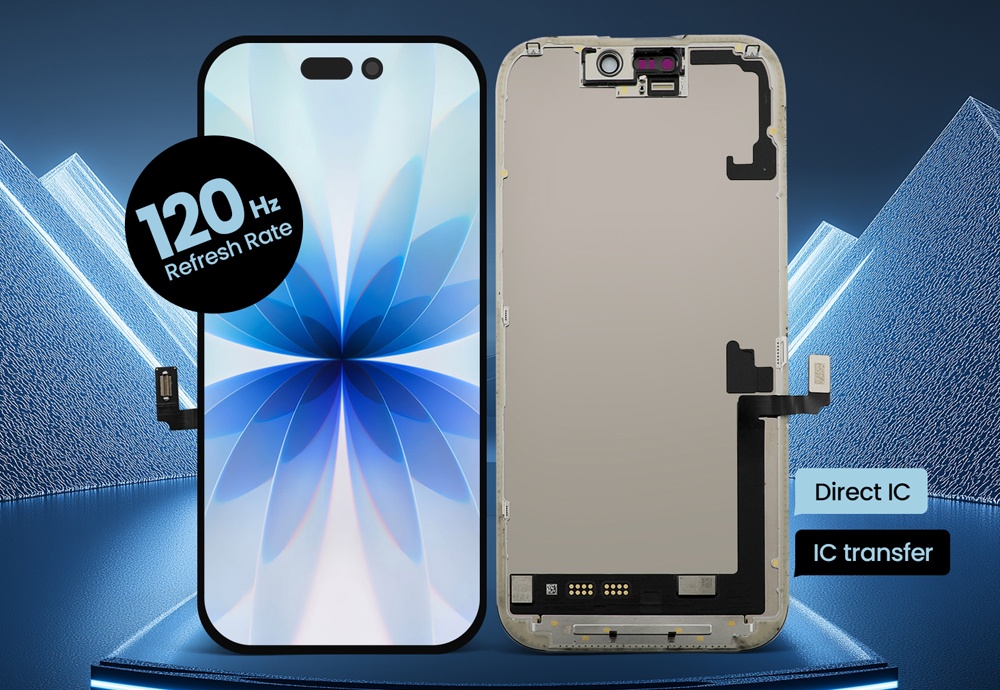
With every new iPhone generation, display technology takes a leap forward. From the standard iPhone 17 to the ultra-slim iPhone 17 Air, Apple has raised the bar for brightness, color accuracy, and power efficiency. In the aftermarket replacement screen industry, replicating that “original-quality” experience is no easy task — especially when the screen type has evolved to Soft OLED.
As a national high-tech enterprise with 14 years of R&D and manufacturing experience, Hong Sheng Tong Photoelectric (JH Screen) has successfully brought to market Soft OLED screens for the iPhone 17 and iPhone 17 Air. These screens deliver high brightness, premium materials, and durability that matches the original. Below, we reveal the technical details behind them.
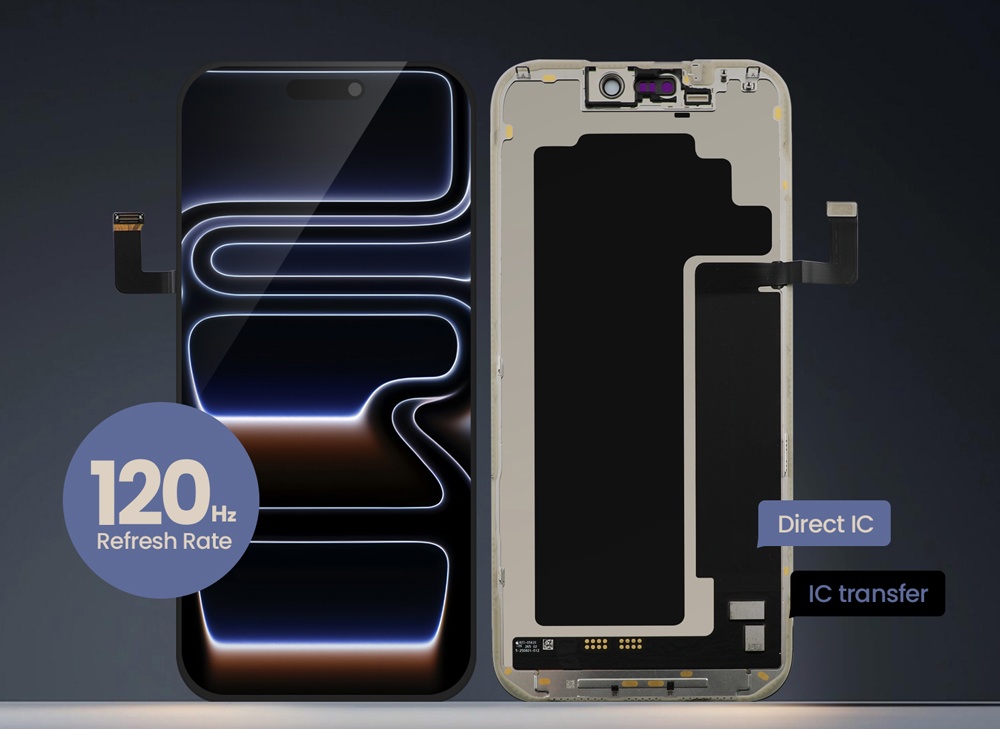
1. What is Soft OLED, and Why Must the iPhone 17 Air Use It?
Traditional rigid OLED (Hard OLED) uses a glass substrate, while Soft OLED uses a flexible polyimide substrate. This is precisely the solution Apple has adopted across the iPhone 17 series, taken to the extreme in the iPhone 17 Air.
The core advantages of Soft OLED:
Thinner and lighter: Substrate thickness reduced by approximately 30%, directly enabling the ultra-slim body of the iPhone 17 Air.
Curved lamination: Allows for narrow or even bezel-less designs, with no accidental touches on the edges.
Image quality leap: Superior color purity, contrast, and brightness uniformity compared to rigid OLED.
JH Screen‘s Soft OLED screens strictly follow the original optical and mechanical specifications, ensuring that after replacement, the phone’s appearance, feel, and display quality are indistinguishable from the original.
2. High Brightness: Clear in Sunlight, Comfortable in Low Light
For the iPhone 17 series, peak brightness is the first threshold of user experience. The original screen can achieve over 1000 nits in outdoor conditions, while many cheap replacement screens only reach 600–800 nits, making them nearly unreadable under sunlight.
JH Screen‘s Soft OLED modules use custom high-efficiency emitting materials and optimized pixel driving circuits to achieve:
Typical brightness: 800 nits
Outdoor peak brightness: ≥1000 nits
HDR local peak: 1200 nits
This means that when users navigate, take photos, or watch HDR videos outdoors, the display remains vivid and clear — no need to shade the screen. At the same time, we preserve the original auto-brightness curve and color management, ensuring the screen is not harsh in dim light and accurately reproduces a True Tone-like experience.
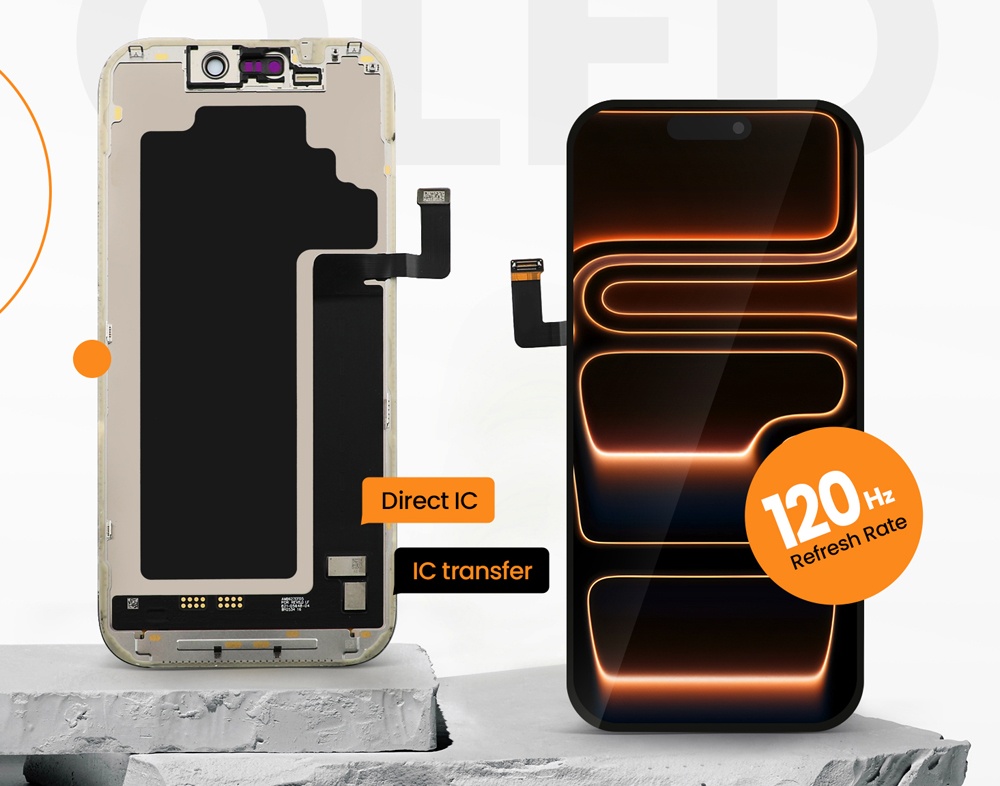
3. Materials and Durability: Upgrading from Substrate to Cover Glass into “Armor”
Durability of replacement screens has always been a pain point in the repair industry. Easy breakage from drops, flex cable tears, and green lines on the display — these often stem from material compromises. JH Screen rebuilds the durability standard from three key aspects:
Flexible Substrate + Reinforced Encapsulation
We use imported-grade polyimide film and add a nano-stress buffer layer on the TFT circuit, making the screen less prone to internal circuit cracks when bent or lightly impacted.Chemically Strengthened Cover Glass
Equipped with high-quality aluminosilicate glass, treated with a deep ion-exchange process. The surface compressive stress layer is deeper, providing 2x better scratch resistance and superior drop resistance compared to ordinary glass.Reinforced COP Flex Cable
Due to the extremely compact internal space of the iPhone 17 Air, the flex cable must endure high flexibility and tensile stress. We adopt COP (Chip On Plastic) direct bonding and add reinforcement glue at the root of the cable. It passes over 20,000 bend cycles, eliminating the common issue of lines appearing after one or two months of use.
4. Premium Materials: No Compromise on Any Layer
“Premium materials” is not an empty phrase — it is a verifiable list of component choices:
Polarizer: High-quality circular polarizer from Japanese or Taiwanese suppliers, offering excellent outdoor anti-reflection performance.
Optical Adhesive: Fully laminated with high-transparency OCA — no bubbles, no rainbow effects, and touch sensitivity as responsive as the original.
Driver IC: Compatible with Apple‘s T12 chip communication protocol, ensuring no pop-up messages and no brightness jumps.
We firmly believe that only when every optical material and every passive component is matched to original specifications can the final screen be called “original quality.”
5. Why Choose JH Screen for iPhone 17/17 Air Replacement Screens?
14 years of technical heritage: From iPhone 6 to the latest series, we have never fallen behind.
Factory-direct, quality controlled: Integrated R&D, production, and sales — every batch undergoes aging, drop, and electrical testing.
OEM and wholesale support: Custom flex cables, neutral packaging, laser branding, and more for repair chains or brands.
Conclusion
The Soft OLED screens of the iPhone 17 and iPhone 17 Air represent the pinnacle of current mobile display technology. A great replacement screen should continue that experience, not compromise it. JH Screen is ready — with high brightness, true durability, and premium materials — to help your business win user trust.
Whether you need bulk supply or an OEM custom solution, welcome to contact the JH Screen team.
Together, let‘s extend the original-quality display experience for every iPhone 17.