

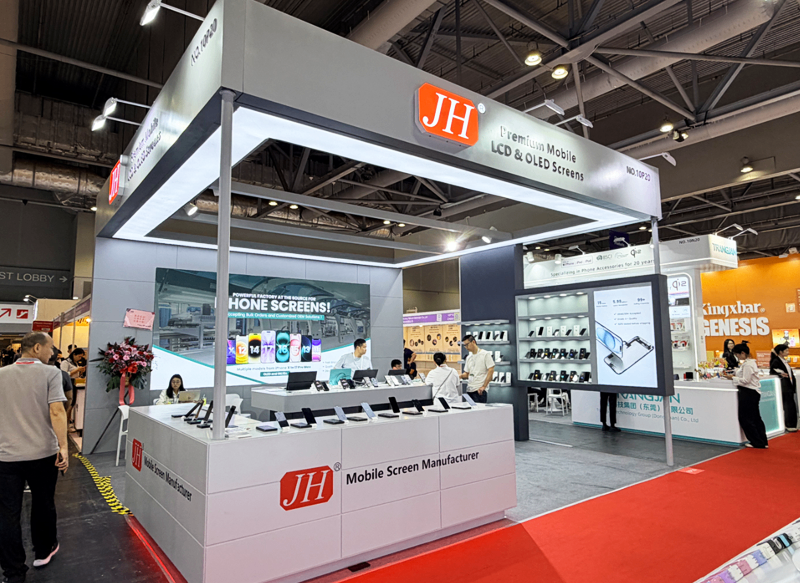
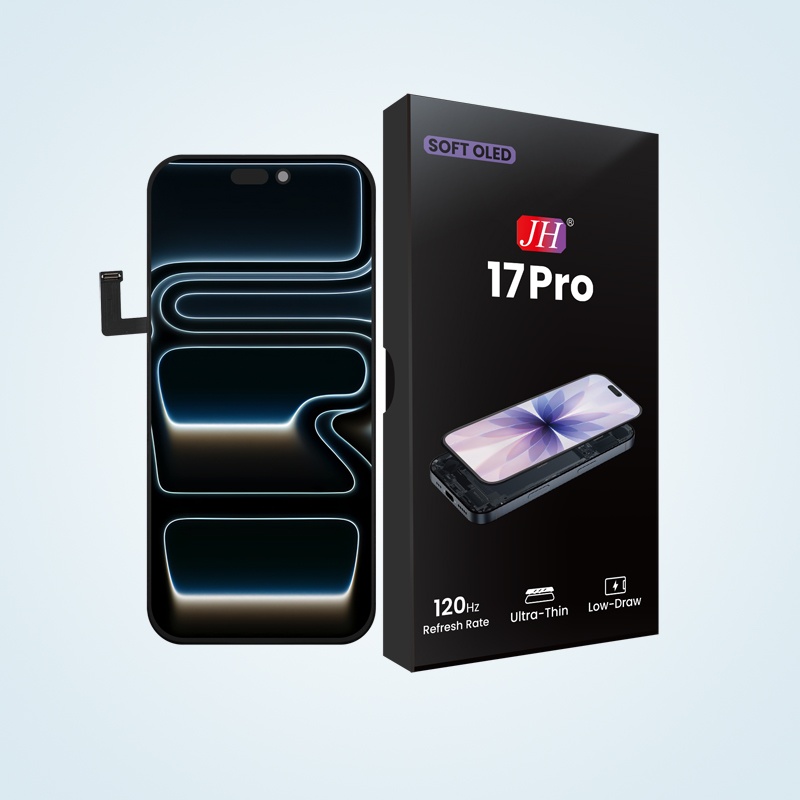
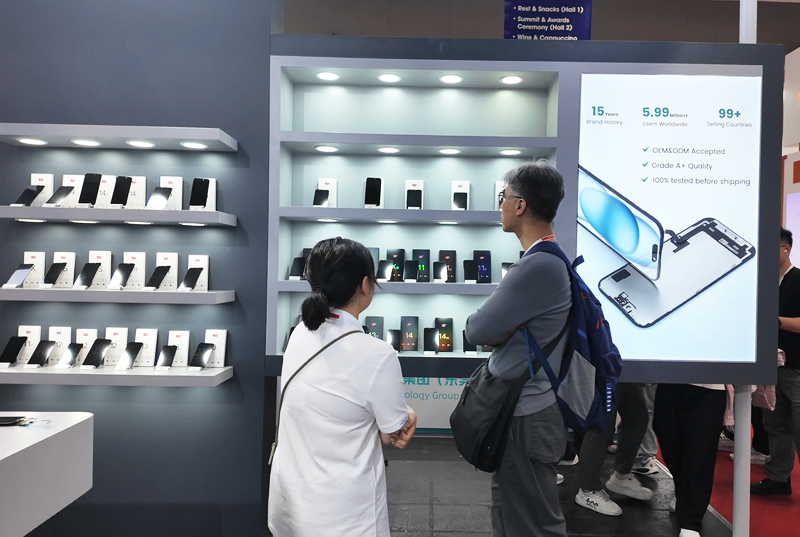
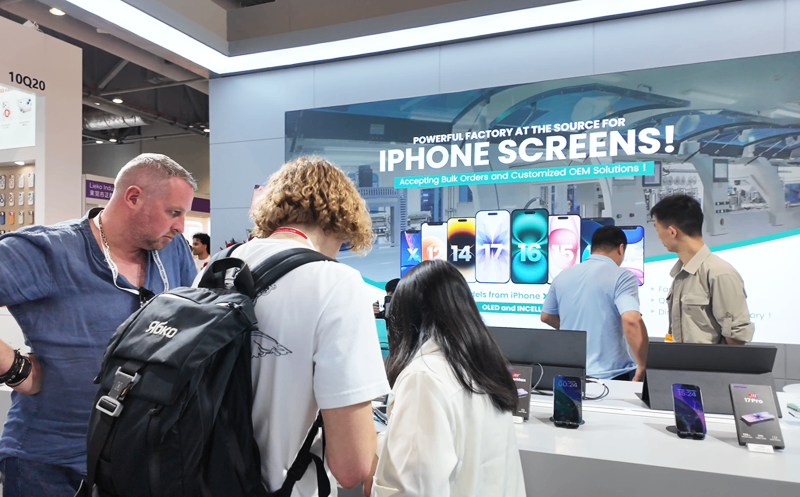
From April 18th to 21st, 2026, the annual Global Sources Mobile Electronics Show was held at AsiaWorld-Expo in Hong Kong. Behind the scenes of the mobile phone repair industry, JH Mobile's screen factory showcased its latest batch of screen components for mid-to-high-end iPhone In-cell and soft OLED models at the exhibition.
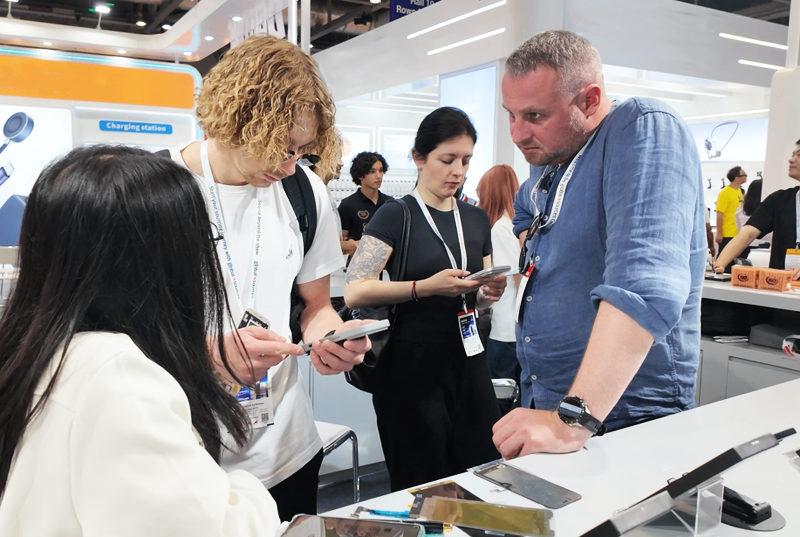
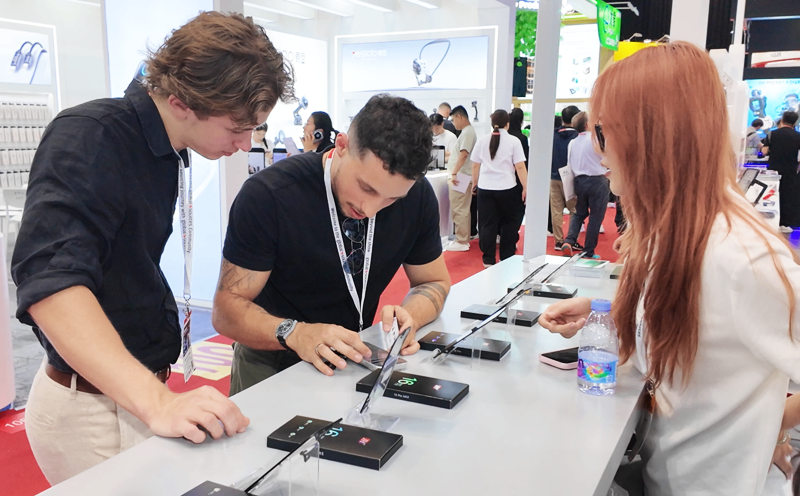
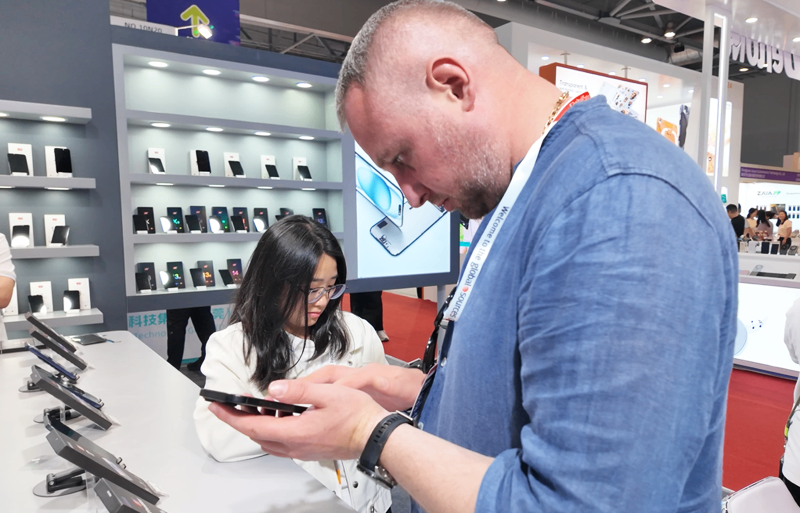
Four days – not long, not short. From morning till evening, our booth was busy with people: wholesalers from India and Vietnam, small repair chain buyers from Europe, trading companies from the Middle East and South America. They sat down, picked up our screen samples, turned them over and over to check the flex cables, test the touch, compare color differences, and then asked a bunch of very practical questions.
Those questions are exactly the same ones that mobile repair shop owners in China think about every single day.
Today, no bragging, no slogans – just using this show as an opportunity to chat with repair shop owners: What does a good screen really look like? As an original factory, what real customer feedback did JH Mobile screen hear? And in the 2026 repair market, is screen replacement still a business worth being in?
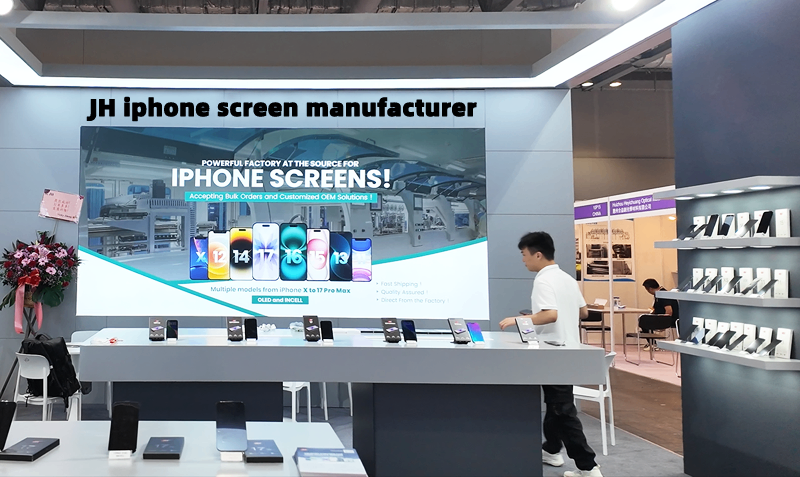
1. At the Show: The Three Questions Foreign Buyers Asked Most
Let me set the scene.
Scene 1: A repair shop owner from Manchester, UK, opened his phone gallery – full of photos of screen failures he’d encountered. He picked up our iPhone 14 Pro Max OLED soft‑flex screen, gently pressed the edge with his fingertip, and asked: “Is this cover glass refurbished or original process? Cold light or hot light? How long is the warranty?”
Scene 2: A buyer from Dubai took a magnifying glass to look at the solder joints around the IC area, then asked: “Are the ICs on these batches salvaged from original screens or newly programmed? Has the touch sensitivity passed a 24‑hour burn‑in test?”
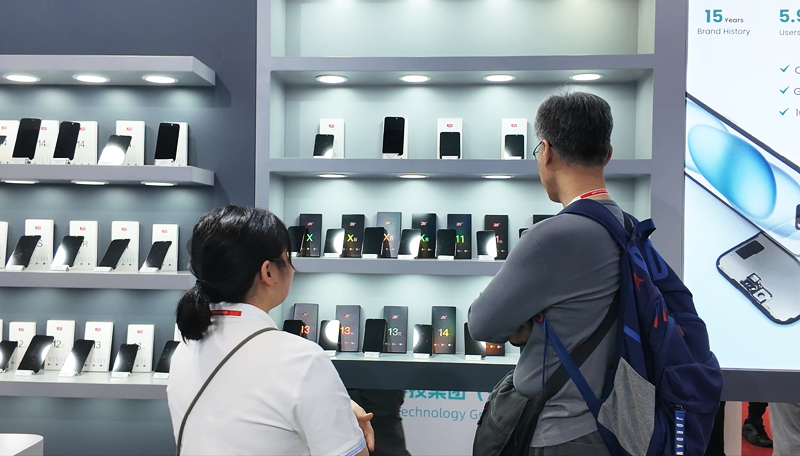
Scene 3: Two young repair technicians from Hanoi, Vietnam, brought their own testing jigs and tested more than ten different screen models from our booth one by one. After testing, they said in broken English: “Color reproduction is okay, but you don’t provide True Tone programming tools, do you?”
See? No matter which country they come from, what repair shop owners really care about is never “how big is the factory” or “how many years has it been around”. It’s: Once this screen is installed on a customer’s phone, will it work reliably? And if something goes wrong, who do I turn to?
Our colleagues at JH Mobile screen answered all of these questions on the spot. We’re not the kind of exhibitor that just lays out samples. Every screen has a corresponding batch test report, and we offered an after‑sales policy of “360‑day replacement, no repair”. Many customers signed letters of intent right there.
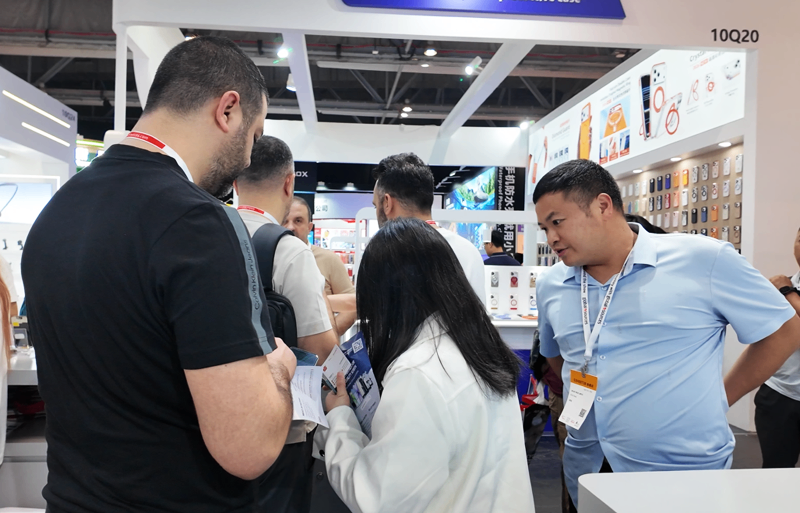
2. The Pain Points of Mobile Repair Shop Owners – We Get It
The mobile repair market in China has changed fast in recent years. Screen replacement used to be very profitable – you could make 200–300 RMB on an iPhone screen. Now prices are transparent and competition is fierce; many shops rely on “screen replacement to bring customers in, motherboard repair to make money”. But no matter how the model changes, the quality of the screen itself is always the make‑or‑break for a shop’s reputation.
We’ve summed up the most common complaints we hear from repair shop owners:
1. “After a month, the assembled screen starts ghost‑touching, and the customer comes back cursing me.”
Many
small workshops use ICs that are second‑hand salvaged or poorly
programmed. The touch response is hit‑or‑miss. The customer thinks it’s
fine at first, but after a week or two, they get dead spots, ghost
touches, even random screen clicks. The shop owner not only has to
replace it for free, but also loses time and trust.
2. “No after‑sales support – they don’t reply on WeChat.”
Many
shops buy from middlemen because the price is low. But when something
goes wrong, the seller either blames “shipping damage” or just blocks
you. The profit margin on a screen is already thin; after‑sales costs
can eat up the entire profit from the order.
3. “New models come out too fast – inventory ties up my cash.”
When
the iPhone 16 and 17 series first launched, screen assembly prices were
ridiculously high, but repair demand was real. If you stock too many,
you lose money when prices drop; if you stock too few, you run out.
Inventory management is a huge headache for small‑to‑medium repair
shops.
JH Mobile screen discussed these issues with dozens of customers from different countries at the Hong Kong show. The solutions aren’t complicated – but they require a factory that’s truly willing to think from the repair shop’s perspective.
3. What JH Mobile Screen Actually Does – A Few Practical Approaches
We’re not a factory that likes to talk big. Our production line is in Bao’an, Shenzhen, with a daily capacity of 60,000 units. We make in‑cell and OLED screens for various iPhone models. The reason we earned satisfaction from customers from many countries at this Hong Kong show wasn’t because of a fancy booth – it was because of these things:
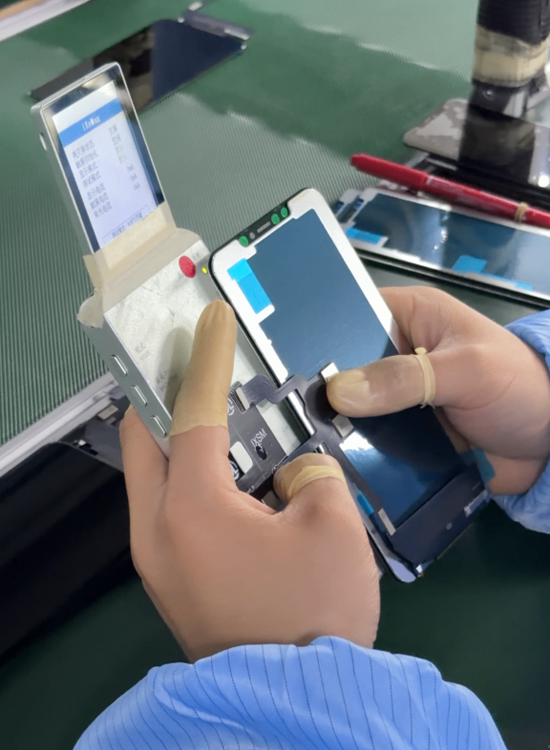
1. “100% full inspection” – not random sampling
Many
factories do only random sampling to meet production quotas. On JH
Mobile screen’s assembly line, every workstation has an inspection
point: cover glass incoming inspection, LCD light‑up test, touch‑swipe
test, burn‑in test, visual inspection. Every screen goes through at
least five rounds of combined manual and equipment testing before
leaving the factory. At the show, we played a video of our inspection
process on loop – far more convincing than any verbal promise.
2. Clear grading – no word games
We divide our screens into three grades:
A+ (near‑original quality)
A (minor frame or cover glass imperfections, perfect touch)
B (fine cosmetic scratches, fully functional)
The price and warranty period for each grade are written clearly on the quotation. No guesswork, no gambling. Repair shop owners can choose based on their customer base – premium shops use A+, quick‑repair shops use A, low‑cost promos use B.
3. No after‑sales finger‑pointing – we go by test results
As
long as there’s no obvious physical damage (like cracked corners or
torn flex cables), for any non‑human‑caused display or touch failure, JH
Mobile screen promises “360‑day replacement, no repair”.
This policy got a lot of thumbs‑up at the Hong Kong show. Because what
repair shops fear most isn’t the occasional bad screen – it’s the
factory making excuses when a bad screen shows up. We simply say: send
it back, we test it, if it’s really defective, we ship a new one
immediately.
4. Small‑batch mixed orders for repair shops
Many
factories only accept orders of 100, 500 or more units, but a repair
shop might only need 5 or 10 at a time. JH Mobile screen offers a
“small‑batch mixed order” channel for domestic repair shops – different
models and grades can be combined, with a minimum of just 5 pieces. The
price is slightly higher than large batches, but far lower than buying
from middlemen. Several Southeast Asian repair shop owners at the Hong
Kong show said this model was very flexible.
4. Those “Warm” Moments at the Hong Kong Show
Enough about the hard stuff – let’s talk about the softer side. Our JH team really worked hard at this show. We arrived at the booth at 9 a.m. every day and didn’t leave until 6 p.m. Because customers came from different time zones, sometimes we had video calls in the evening to continue conversations.
One detail stuck with me: a repair shop owner from Brazil who didn’t speak English or Chinese – he communicated entirely with a translation app. He really wanted to know the difference between OLED soft flex and hard flex on the iPhone 15 Pro Max. Our technical colleague took two original pulled screens, put them under a microscope, and let the customer see for himself the difference in the flex cable routing and IC placement. That Brazilian guy gave a thumbs‑up and placed a trial order for 50 pieces on the spot.
Another was a young woman from Thailand who runs a small repair shop in Bangkok specializing in iPhones. She used to buy from local wholesalers – expensive and often out of stock. At the show, she did the math: buying directly from JH, even after international shipping and duties, she could still save about 15% per screen compared to local wholesale. She placed her first order right there and asked if we could teach her how to test screens. Our sales colleague spent half an hour using simple English and hand gestures to walk her through the key testing points.
These moments reminded me that trade shows aren’t just about signing orders – they’re about building understanding and trust between the upstream and downstream of the repair industry. The warm hospitality of JH’s staff at the show wasn’t a professional fake smile – it came from genuinely wanting to help customers solve problems. Because we know that behind every screen is a repair shop owner making a living, and behind that is the smile of an ordinary customer getting their phone fixed.
5. Some Heart‑to‑Heart Words for Mobile Repair Shop Owners
Finally, a few honest words for repair shop owners:
On price: Don’t chase the lowest price blindly. If a screen is 20 RMB cheaper than market, but the failure rate is twice as high, you lose more in the end. When choosing a factory, look first at its inspection process and after‑sales policy.
On inventory: Don’t tie up all your cash in hot models. iPhone 12, 13, 14 series still have huge screen replacement volumes, but margins are thin. Newer models like 15, 16, 17 have higher margins but prices fluctuate a lot. Balance high‑ and low‑end stock wisely.
On testing: If you’re a new repair technician, always put screens on a testing jig – test the whole touch area, test brightness adjustment, test for image retention. Don’t be lazy. One extra minute of testing saves an hour of after‑sales work.
On partnerships: Find a supplier like JH Mobile screen that’s willing to grow with you. We don’t demand a huge first order. Even if you take only 5 pieces at a time, we’ll carefully pack them, attach the correct model labels, and include a test report. The relationship between a repair shop and a factory should be a long‑term friendship, not a one‑off deal.
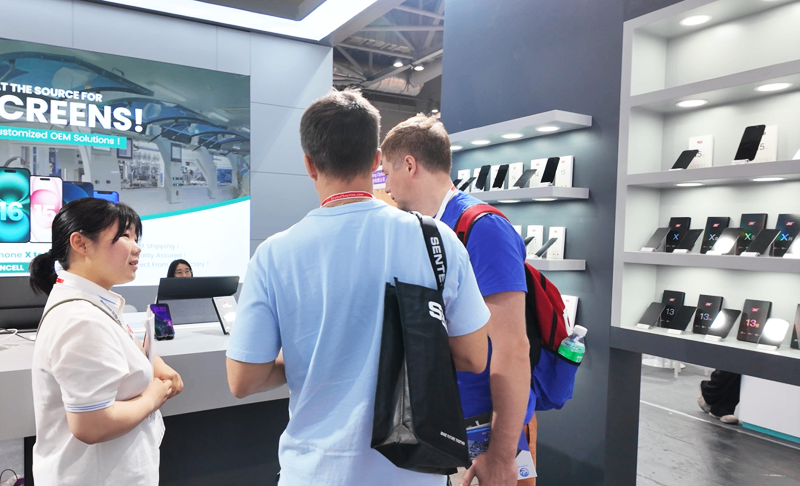
This Hong Kong show has concluded successfully, but JH Mobile screen’s assembly lines are still running every day. On April 21, 2026, when we packed up our booth, our sales manager took a group photo in front of the booth. Everyone was smiling – not because of how many orders we signed, but because we heard customers from different countries say the same thing:
“Your screens are reliable. We’ll be back.”
If your mobile repair shop is struggling with screen quality, after‑sales support, or supply stability, come take a look at JH Mobile screen. Our factory in Shenzhen is always open for you to visit – see for yourself how a screen goes from LCD, backlight, cover glass, and flex cable to the complete assembly in your hands. No fancy marketing, just twelve assembly lines running at a daily capacity of 60,000 units, strict quality control, and a group of ordinary people willing to solve problems with you.
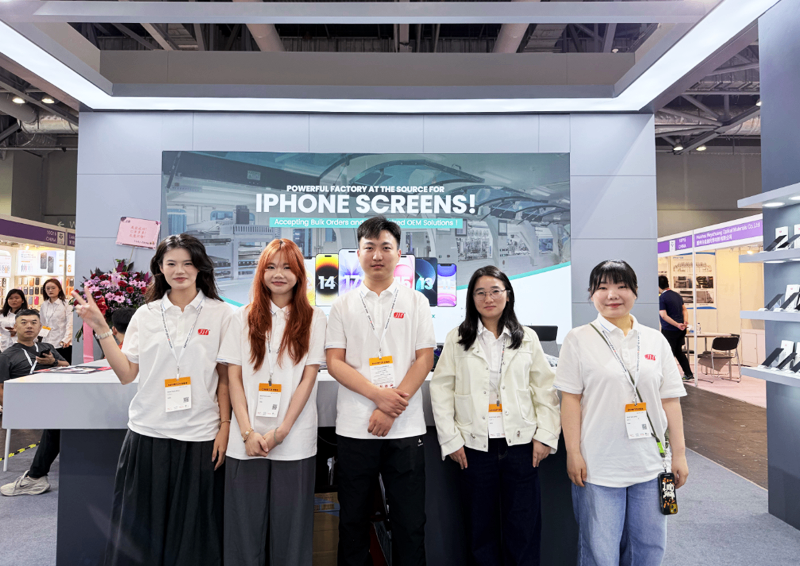
JH Mobile screen manufacturer & supplier – the reliable “behind‑the‑scenes factory” that’s got your back as a repair shop owner.