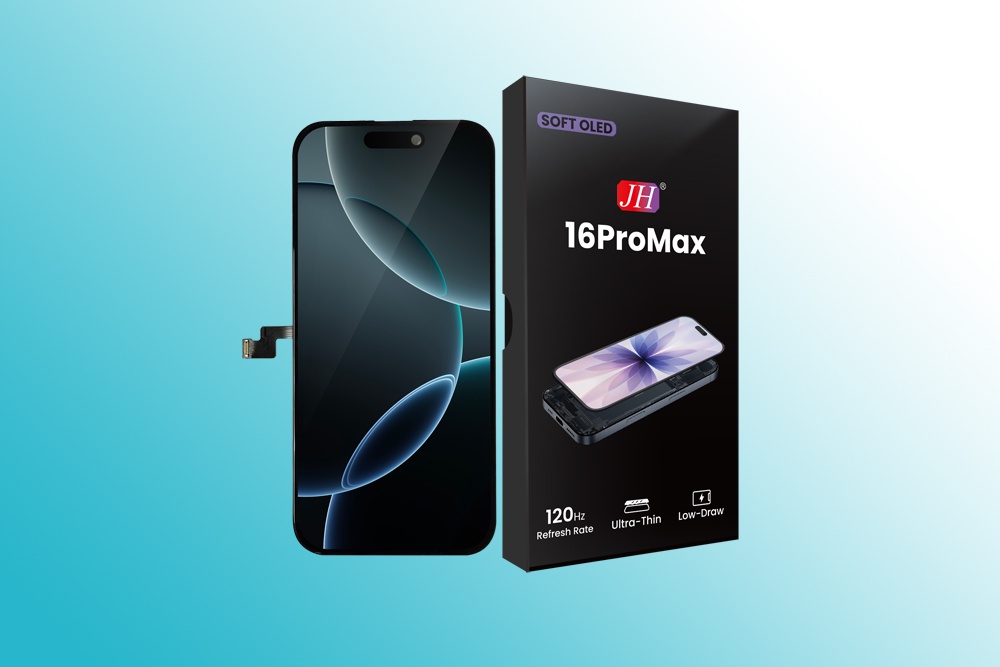
JH Soft OLED for iPhone 16 Pro Max VS Original VS Others
Introduction
When your iPhone 16 Pro Max screen breaks, you face an important decision: replace it with an Original Apple display, a JH Soft OLED aftermarket screen, or another type of replacement. Each option offers a different balance of quality, price, and functionality. This article compares these three choices to help you make an informed decision based on your budget and usage needs.
Original Apple Super Retina XDR Display
The Original Apple screen is the gold standard. The iPhone 16 Pro Max features a 6.9‑inch Super Retina XDR OLED display with 2868×1320 resolution at 460 ppi. It supports ProMotion adaptive refresh rates up to 120Hz, reaches 2,000 nits outdoor peak brightness, and includes True Tone technology that adjusts screen color to ambient light. The Ceramic Shield front glass offers exceptional drop resistance.
The biggest drawback is cost—Original screens cost 40–60% more than high‑quality aftermarket alternatives. However, for professional photographers, designers, or anyone planning to sell their phone soon, the investment is worthwhile.
JH Soft OLED Replacement Screen
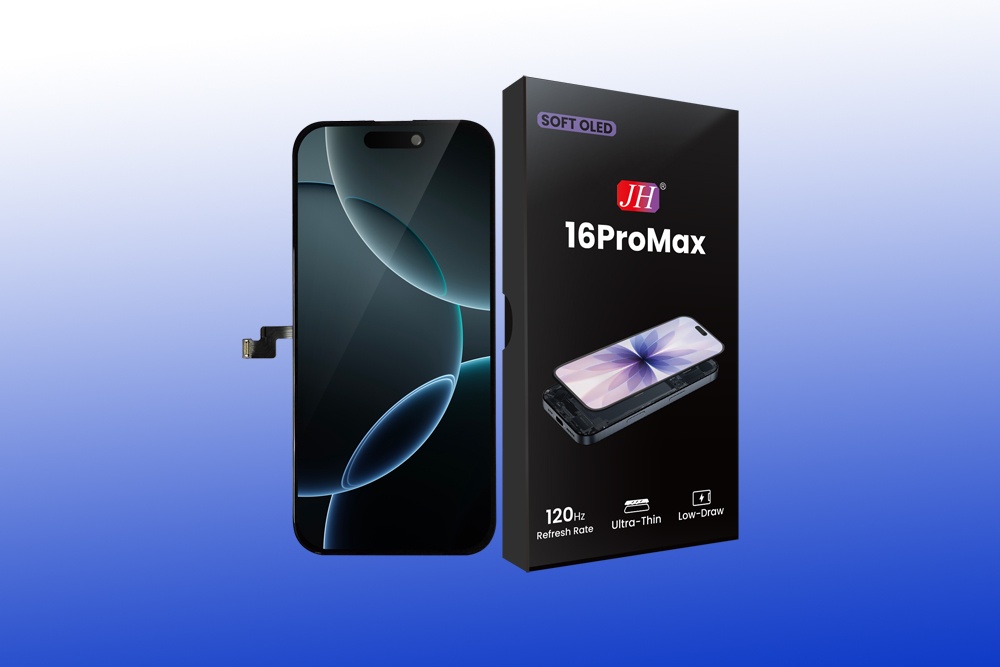
JH Soft OLED screens are premium aftermarket displays built on flexible plastic substrates—the same underlying technology as Original Apple OLEDs. These screens deliver excellent color accuracy (98%+), deep blacks, and smooth 120Hz refresh rate performance.
A key advantage is that JH Soft OLED screens support True Tone when properly programmed. They also feature flexible construction, making them more durable against drops and easier to install compared to rigid hard OLED alternatives. With costs roughly 40% lower than genuine Apple screens, JH Soft OLED offers the best balance of quality and value for most users.
Other Replacement Screen Types
Other aftermarket options include Hard OLED and LCD screens. Hard OLED uses rigid glass substrate rather than flexible plastic, making it more affordable but also more fragile under impact and typically lacking True Tone support. LCD is the budget option—up to 70% cheaper than Soft OLED—but delivers noticeably lower color accuracy, contrast, and battery efficiency. Refurbished original screens offer genuine Apple quality at a moderate discount, though availability can be inconsistent.
Which Should You Choose?
For most iPhone 16 Pro Max users, JH Soft OLED hits the sweet spot—near‑original quality at a sensible price. If absolute perfection matters for professional work or resale value, choose Original. For very tight budgets on older devices, consider Hard OLED, but avoid LCD for a modern Pro Max as the drop in image quality is significant.