

The Complete Guide to iPhone Screen Manufacturers: Who Makes the Displays Behind Apple’s Iconic Devices
Introduction
When you look at an iPhone screen, you’re gazing at one of the most advanced display technologies ever created. The vibrant colors, deep blacks, and silky-smooth responsiveness don’t happen by accident—they are the result of years of research, billions of dollars in investment, and a highly sophisticated global manufacturing ecosystem. But have you ever wondered who actually makes these stunning displays?
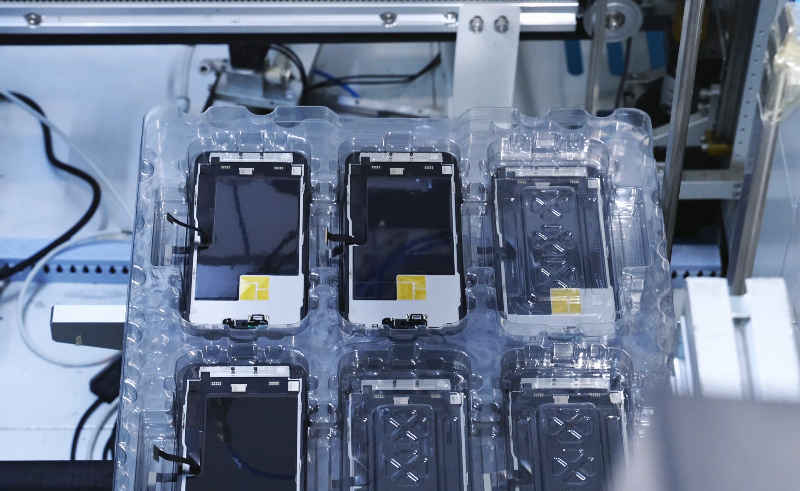
The answer is more complex and exclusive than you might think. Behind every iPhone screen lies a carefully curated network of elite display manufacturers that have earned Apple’s trust through decades of innovation, rigorous quality control, and massive production capabilities. This comprehensive guide explores the world of iPhone screen manufacturer companies—from the primary suppliers that produce Apple’s original displays to the aftermarket manufacturers that provide replacement screens for repair shops worldwide.
Whether you’re a repair business owner sourcing replacement parts, a tech enthusiast curious about what goes into the screen you touch every day, or simply someone who wants to understand the intricate supply chain behind the world’s most popular smartphone, this article will give you everything you need to know about the iPhone screen manufacturer ecosystem.
Understanding the iPhone Screen Manufacturing Ecosystem
The Elite Circle: Who Supplies Apple’s Original Displays?
Apple does not manufacture its own displays. Instead, the company relies on a select group of Tier-1 display manufacturers that possess the technical expertise, production capacity, and quality control systems to meet Apple’s exacting standards. The iPhone screen manufacturer landscape is remarkably concentrated—only a handful of companies globally have the capability to produce screens that meet Apple’s rigorous requirements.
The Dominance of OLED Technology
Since the introduction of the iPhone X in 2017, Apple has progressively transitioned its entire iPhone lineup to OLED (Organic Light-Emitting Diode) displays. Today, all current iPhone models—from the standard editions to the Pro Max—use OLED screens. The iPhone SE remains the only model still using LCD, but even that is expected to transition to OLED in future iterations.
This shift from LCD to OLED fundamentally transformed the iPhone screen manufacturer landscape. OLED displays offer superior contrast ratios, deeper blacks, better energy efficiency, and more vibrant colors compared to traditional LCD panels. However, they are also significantly more complex and expensive to manufacture, requiring specialized production facilities and expertise that only a few companies possess.
The Concentration of Supply
The display supply chain for iPhones is remarkably concentrated. Industry analysts project that Apple’s core panel suppliers will continue to dominate iPhone display production for the foreseeable future. The barrier to entry is extraordinarily high—manufacturers must invest billions in production facilities, master complex OLED deposition techniques, achieve consistent yield rates above 70-80%, and pass Apple’s stringent quality certifications.
For context, Apple’s total iPhone panel shipments exceed 230 million units annually. The sheer scale of production required means that only manufacturers with massive production capacity can even compete for Apple’s business. Each approved iPhone screen manufacturer must operate multiple production lines running 24/7 to meet Apple’s insatiable demand.
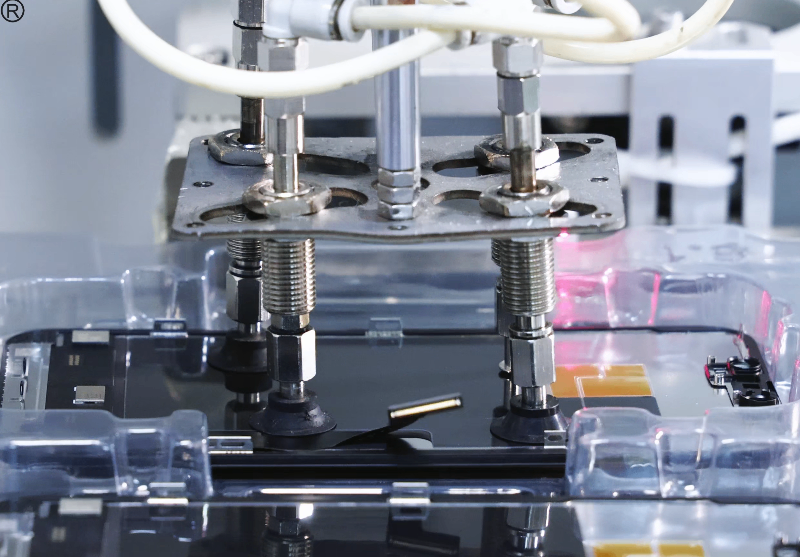
The Evolution of iPhone Screen Manufacturing
The LCD Era – Japan’s Dominance
To understand today’s iPhone screen manufacturer landscape, it’s essential to look at how Apple’s display technology has evolved over time. A decade ago, the situation was dramatically different.
During the LCD era, Japanese manufacturers dominated the iPhone display supply chain. Japan Display Inc. (JDI) and Sharp were the primary suppliers, together providing approximately 70% of iPhone displays at their peak. JDI, formed in 2012 through a government-backed merger of Sony, Toshiba, and Hitachi’s display units, was once the largest iPhone screen manufacturer, supplying at least 60% of iPhone screens at its zenith.
These Japanese manufacturers had spent decades perfecting LCD technology. Their displays were renowned for color accuracy, brightness, and reliability. However, they made a critical strategic error: they failed to invest early and aggressively in OLED technology.
The OLED Transition – A Changing Landscape
As Apple began transitioning to OLED displays, the iPhone screen manufacturer landscape shifted dramatically. Japanese manufacturers like JDI and Sharp, which lacked大规模 OLED production capabilities, were gradually phased out. Today, JDI and Sharp no longer supply screens for iPhones, having lost their position in Apple’s supply chain.
The transition to OLED represented more than just a technology change—it represented a fundamental restructuring of the global display industry. Companies that had invested early in OLED research and production capacity surged ahead, while those that hesitated were left behind. For the iPhone SE, which still uses LCD, JDI and Sharp continue to supply screens. But as Apple phases out LCD entirely, even this remaining business will disappear.
The Rise of Advanced Display Technologies
Today’s iPhone screens incorporate technologies that were unimaginable just a few years ago. LTPO (Low-Temperature Polycrystalline Oxide) technology enables dynamic refresh rates from 1Hz to 120Hz, dramatically improving battery efficiency while delivering buttery-smooth scrolling. The latest displays feature advanced color calibration systems like TrueTone 3.0, which ensures consistent color accuracy across different lighting conditions.
Future iPhone screens are expected to incorporate even more advanced technologies. Foldable OLED displays are on the horizon, with Apple reportedly setting a minimum mass-production yield threshold of 70%. Under-display camera technology could eventually eliminate the need for notches or punch-holes. MicroLED technology, while still years away from mass production for smartphones, promises even better brightness, efficiency, and longevity than OLED.
The Manufacturing Process: How iPhone Screens Are Made
From Raw Materials to Finished Display
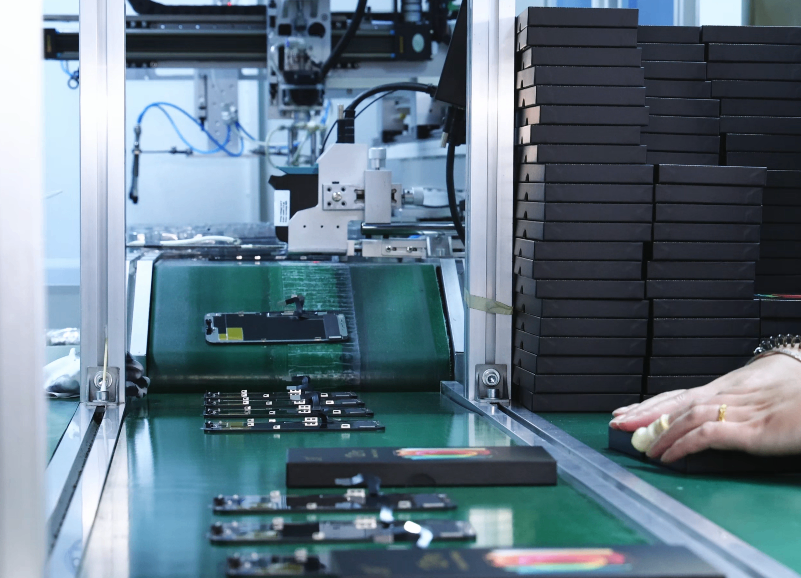
The journey from raw materials to a finished iPhone screen involves extraordinarily complex manufacturing processes that only a handful of iPhone screen manufacturer companies can execute at scale. Understanding this process reveals why so few companies can compete in this space.
OLED Panel Production
OLED panel production begins with a glass or plastic substrate that serves as the foundation for the display. Multiple layers of organic materials are deposited onto this substrate through a process called evaporation. In this process, organic compounds are heated in a high-vacuum chamber until they vaporize and then condense onto the substrate in precise patterns.
The organic layers include the emissive layer that actually produces light, as well as various charge transport layers that help efficiently deliver electricity to the emissive material. The thickness of these layers must be controlled with nanometer precision—any variation can affect color accuracy, brightness, or longevity.
LTPO Technology
For LTPO OLED panels—which power all modern iPhone Pro models—the manufacturing process adds an additional layer of complexity. LTPO technology uses oxide materials for switching thin-film transistors (TFTs), enabling finer control over current delivery to the OLED pixels. This allows the display to dynamically adjust its refresh rate based on what’s being displayed, optimizing battery life without sacrificing smoothness.
LTPO panels require additional manufacturing steps and even tighter process control than standard OLED panels. The oxide materials used in LTPO TFTs are more sensitive to process variations, making yield management particularly challenging.
Quality Control and Certification
Every panel that leaves an iPhone screen manufacturer facility must pass Apple’s rigorous quality control standards. Apple’s Display Quality Program certification requires panels to meet strict specifications for color accuracy, brightness uniformity, contrast ratio, and power consumption.
The certification process is notoriously demanding. Panels must pass extensive optical testing, including measurements of color gamut coverage, white point accuracy (typically within ±0.003 on the CIE 1931 chromaticity diagram), and luminance uniformity across the entire display area. Panels must also pass reliability testing, including exposure to extreme temperatures, humidity, and mechanical stress.
Advanced Manufacturing Technologies
CoE (Color Filter on Encapsulation)
CoE is an emerging technology that removes the traditional polarizer layer from OLED displays and places a color filter directly on the encapsulation layer. This reduces display thickness and increases brightness by allowing more light to escape from the OLED emissive layer.
Four-Edge Bending
Apple has been pushing its display suppliers to develop four-edge bending technology that would allow the screen to wrap around all four corners of the device, creating a truly bezel-less iPhone. This requires extraordinarily precise manufacturing techniques to bend the flexible OLED substrate without damaging the delicate organic layers.
IZO Cathodes
For future iPhones, Apple is exploring IZO (Indium Zinc Oxide) cathodes, which are more transparent than conventional OLED cathodes. This increased transparency could allow more light to pass through the display, potentially enabling under-display sensors and cameras.
The Aftermarket: Replacement Screens for Repair
Understanding the Replacement Screen Market
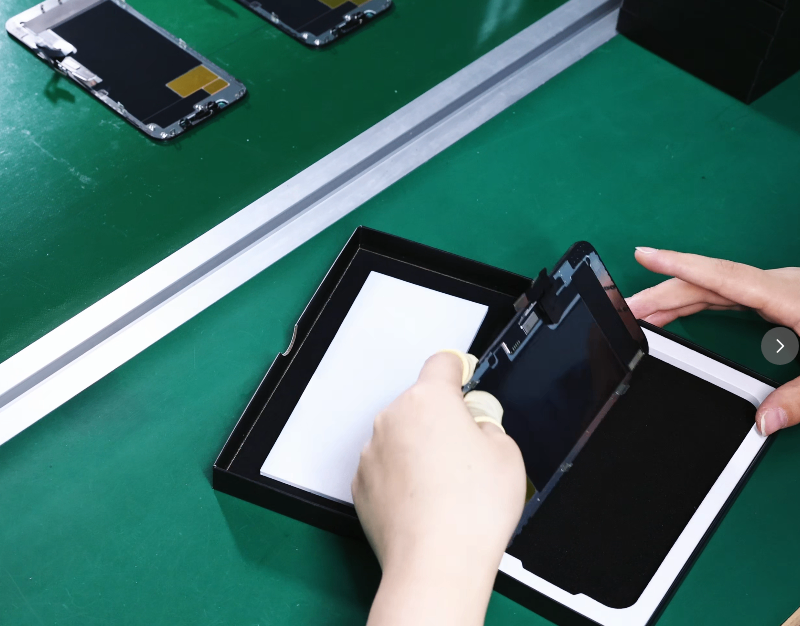
For repair businesses and consumers seeking replacement screens, understanding the difference between OEM (Original Equipment Manufacturer) and aftermarket screens is crucial. The iPhone screen manufacturer ecosystem extends beyond Apple’s primary suppliers to include a vast network of aftermarket manufacturers.
OEM Screens – The Gold Standard
OEM screens are manufactured by Apple’s approved suppliers to Apple’s exact specifications. These screens offer:
Superior color accuracy with DCI-P3 wide color gamut coverage
True Tone technology that adjusts white balance based on ambient light
Perfect fit with the iPhone’s frame, maintaining the device’s IP water resistance rating
Original adhesive and gaskets that preserve the phone’s structural integrity
OEM screens represent the highest standard in display quality, touch sensitivity, and durability. However, these screens are not sold directly to third parties—they are only available through Apple’s official repair channels or as reclaimed screens removed from devices.
Aftermarket Screens – The Replacement Market
The aftermarket iPhone screen manufacturer ecosystem is vast and varied, with production concentrated primarily in China’s Guangdong province, particularly in Shenzhen, Dongguan, and Guangzhou. The famed Huaqiangbei Electronics Market alone hosts over 10,000 tech vendors and component suppliers.
Aftermarket screens fall into several categories:
Copy LCD / Compatible Screens: These are manufactured entirely from scratch by third parties without using Apple’s original components. Quality varies enormously. For LCD models (iPhone 6 through iPhone 11), better aftermarket screens use TFT panels from established display manufacturers, with brightness typically lower than the original.
Soft OLED Copy: For OLED iPhone models (iPhone X and later), many aftermarket screens labeled as “OLED” are actually LTPS LCD panels with flexible backing designed to fit the curved OLED chassis. These lack DCI-P3 wide color, have significantly higher black levels than true OLED, and True Tone is entirely absent.
Refurbished / Reclaimed OEM Screens: These are 100% original screens removed from iPhones but still in perfect condition. They are graded based on cosmetic condition—Grade A being like-new, Grade B showing some wear, and Grade C having visible scratches—but all offer perfect touch and display quality.
Premium Aftermarket Options
In recent years, some aftermarket manufacturers have developed premium replacement screens that approach OEM quality. These “Ultra Soft OLED” screens feature LTPO-grade display architecture and are designed to closely match original OEM performance. Premium aftermarket screens offer:
LTPO-grade display architecture
Dynamic refresh rate support
Color calibration approaching OEM standards
However, standard aftermarket screens typically use fixed refresh rates, lack color calibration, and may have thicker bezels or lower build quality.
How to Choose the Right Replacement Screen
When sourcing replacement screens, understanding the differences between OEM, refurbished OEM, and various grades of aftermarket screens is essential for matching products to customer expectations and budgets. For repair businesses, factors to consider include:
Quality vs. Price: OEM refurbished screens offer the best quality at a premium price; aftermarket screens provide budget-friendly alternatives with varying quality levels
Customer Expectations: Premium customers may expect OEM-quality replacements; budget-conscious customers may accept aftermarket alternatives
Device Age: For older devices, aftermarket screens may be the only cost-effective option
Warranty Considerations: OEM screens typically offer better reliability and longevity
The Future of iPhone Screen Manufacturing
Foldable iPhone Displays
The next major evolution in iPhone displays is foldable technology. Apple is expected to launch its first foldable iPhone, with production planning already underway. Apple has reportedly set a minimum yield threshold of 70% for foldable panels, with the selected manufacturer achieving yields exceeding 80%.
Foldable OLED panels require entirely new manufacturing techniques. The display must be able to bend hundreds of thousands of times without degradation, requiring specialized materials and construction methods. Production involves a front-end and back-end division: thin-film transistors, emission layers, and encapsulation layers are produced in one facility, while the flexible folding screen modules are assembled in another.
Supply Chain Diversification
Apple has long pursued a strategy of diversifying its supply chain to reduce dependence on any single region or supplier. However, the reality is that the pool of qualified iPhone screen manufacturer companies remains extremely limited. The technical barriers, capital requirements, and quality standards are so high that only a handful of companies globally can compete.
This concentration of supply creates both opportunities and risks. For Apple, it means relying on a small number of suppliers for one of the most critical and expensive components in the iPhone. For suppliers, it means intense competition to maintain and grow their share of Apple’s business.
Technological Advancement
The competition among iPhone screen manufacturer companies is driving rapid innovation. LTPO+ technology promises improved power efficiency and display responsiveness. Under-screen infrared technology could shrink the Dynamic Island by moving Face ID components beneath the display. MicroLED technology, while still years away, could eventually replace OLED with even better performance characteristics.
The Impact of Regional Dynamics
The display industry is also shaped by broader regional dynamics. Korean manufacturers have maintained a strong position in premium OLED production. Chinese manufacturers have made significant strides in OLED production capacity and quality, though challenges remain in achieving the quality and yield rates required for Apple’s most demanding applications.
Japanese manufacturers, which once dominated the iPhone display supply chain, have largely exited the smartphone OLED market. Their failure to invest early in OLED technology serves as a cautionary tale about the importance of anticipating technological shifts.
Conclusion: Choosing the Right iPhone Screen Manufacturer Partner
Whether you’re Apple itself selecting Tier-1 suppliers or a repair business sourcing replacement screens, understanding the iPhone screen manufacturer ecosystem is essential.
For original equipment, the iPhone screen manufacturer landscape is dominated by a small number of elite suppliers that have invested billions in OLED production capacity and quality control systems. The technical barriers to entry are extraordinarily high, and only companies that can achieve consistent yield rates above 70-80% while maintaining Apple’s stringent quality standards can compete.
For aftermarket replacements, the choice comes down to balancing quality, price, and customer expectations. OEM refurbished screens offer the best quality, while various grades of aftermarket screens provide budget-friendly alternatives. Premium aftermarket options from specialized manufacturers now offer performance approaching OEM standards, giving repair businesses more choices than ever before.
As display technology continues to advance—with foldable screens, LTPO+ panels, under-display cameras, and eventually MicroLED on the horizon—the world of iPhone screen manufacturing will only become more fascinating. The companies that can consistently deliver the quality, innovation, and scale that Apple demands will continue to shape the future of mobile displays for years to come.