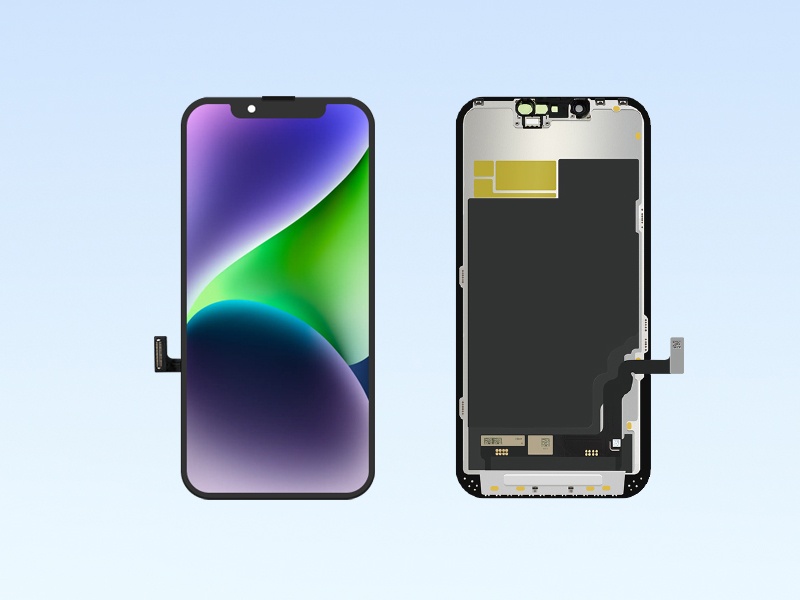
Why Does Your Flexible OLED Screen Need Demura Calibration?
When you pick up a device with a flexible OLED screen and it lights up with brilliant colors and striking contrast, there is a critical process hidden behind that beautiful display—one that most consumers have never heard of: Demura calibration. This process is the dividing line between a screen that looks "stunning" and one that is merely "acceptable."
OLED’s Inherent Flaw: Every Pixel Is an Independent Individual
Unlike LCDs, which rely on a uniform backlight module, OLED is an emissive display technology where every pixel is a self-emitting "tiny light bulb." This design enables extreme contrast ratios and ultra-thin form factors, but it also introduces the risk of luminance non‑uniformity.
During OLED manufacturing, from the crystallization process of low‑temperature polysilicon (LTPS) thin‑film transistors to the evaporation deposition of organic emissive materials, every step is difficult to keep perfectly uniform. TFTs at different positions vary in electrical parameters such as threshold voltage and mobility, and these non‑uniformities translate into differences in pixel current and luminance. In addition, OLED materials degrade over time, with blue pixels decaying the fastest. These factors combine to create what the display industry calls "Mura"—a Japanese term meaning "blemish" or "non‑uniformity"—referring to visible luminance or color variations on a display.
For flexible OLEDs, the bending characteristics of the plastic substrate and the more complex manufacturing processes make Mura issues even more pronounced.
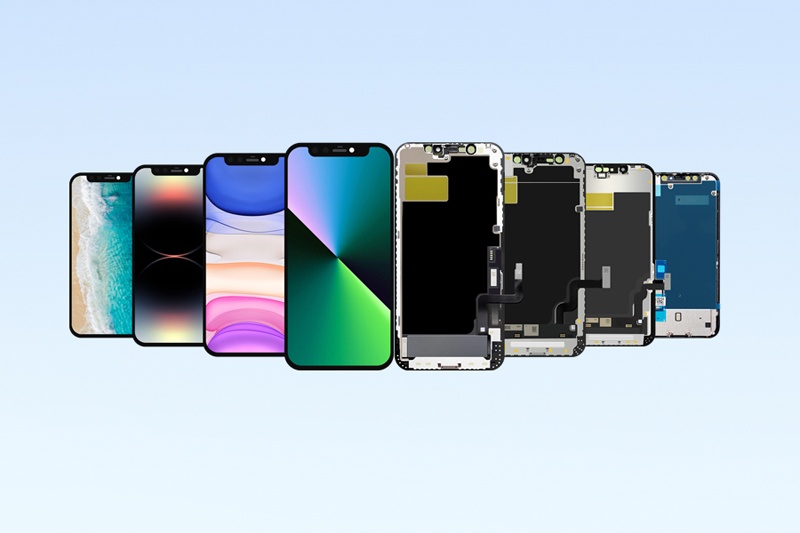
Demura: Giving Each Pixel Individual Attention
Demura (i.e., Mura elimination) is designed precisely to address this problem. It is a pixel‑level luminance and chromaticity correction technology.
The Demura calibration process generally works as follows: First, a high‑precision imaging colorimeter or luminance meter measures every pixel of the OLED panel at different gray levels (typically including high, mid, and low gray levels), recording luminance and chromaticity data. Then, proprietary algorithms compare the measured values of each pixel against target values and compute the compensation coefficients needed for each pixel. Finally, these compensation data are programmed into the display driver IC (DDIC). From then on, whenever the screen displays an image, the driver IC adjusts the drive signal for each pixel in real time—dimming overly bright pixels and brightening overly dark ones—to achieve visual uniformity across the entire panel.
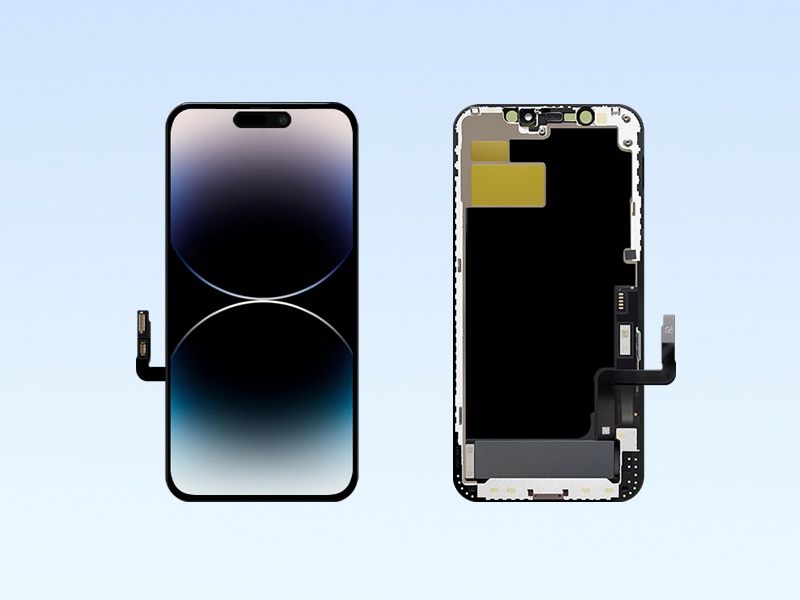
Beyond Uniformity: Yield and Value
The value of Demura calibration goes far beyond making the screen look prettier. For display panel manufacturers, Mura defects are one of the leading causes of yield loss. Through Demura calibration, panels that would otherwise be rejected due to luminance non‑uniformity can be effectively repaired, significantly improving yield and reducing costs. For end‑consumers, Demura ensures that every OLED panel you receive delivers consistent, stable picture quality, rather than leaving you to "gamble" on the panel’s appearance.
From smartphones to wearables, from automotive displays to VR headsets, flexible OLEDs are being adopted in ever‑wider applications, and the demand for display uniformity continues to rise. Demura calibration is the indispensable technological foundation behind that "perfect screen."