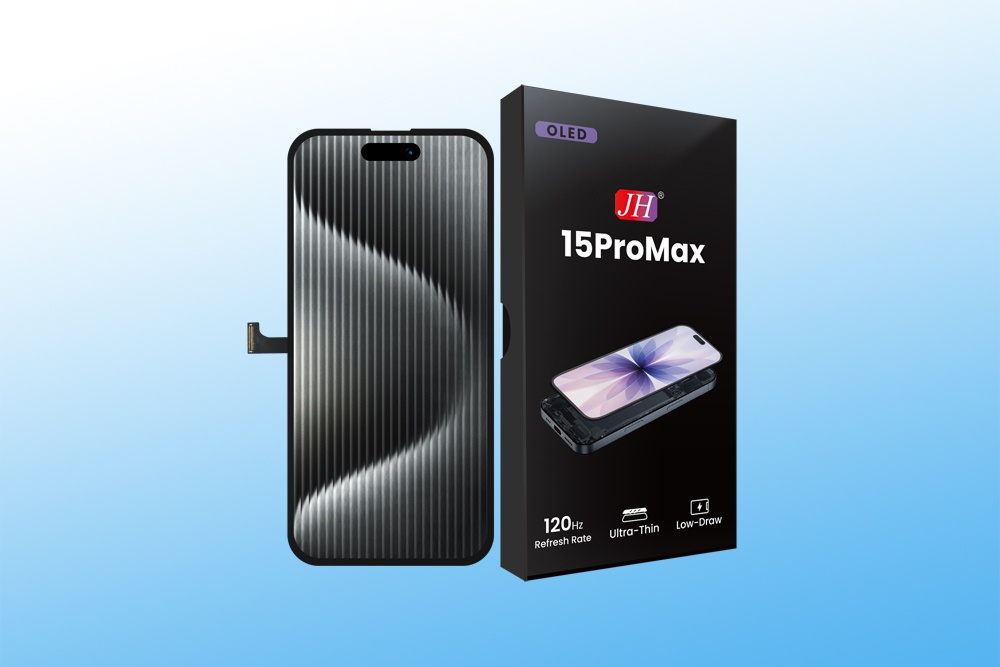
Why Is Gamma Programming Performed on Soft OLED for iPhone Screens?
Introduction
Gamma programming is a critical yet often overlooked step in the manufacturing of premium smartphone displays. For Apple’s iPhone, which has consistently set industry benchmarks for display quality, gamma calibration plays an especially vital role in delivering the exceptional visual experience users have come to expect. This article explores why gamma programming is performed on soft OLED panels for iPhone screens, examining the technical foundations, manufacturing challenges, and long-term performance considerations that make this process indispensable.
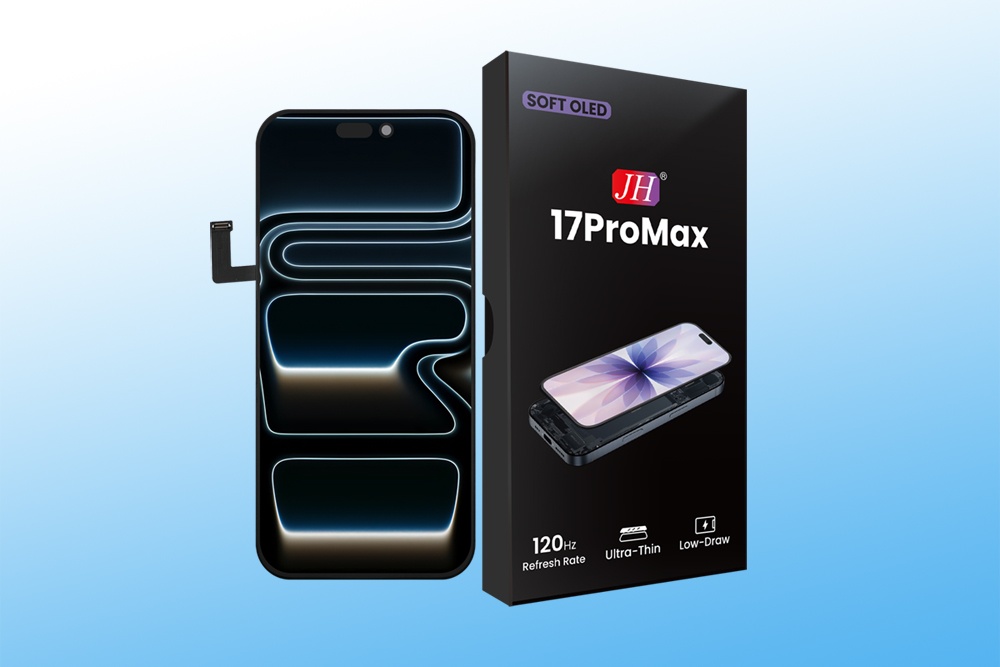
Understanding Gamma: The Foundation of Display Calibration
What Is Gamma in Display Technology?
At its core, gamma describes the relationship between the digital signal sent to a display and the actual luminance output produced on screen. This relationship follows a power function—hence the term “gamma,” derived from the Greek letter γ used to represent the exponent in this function.
The human visual system does not perceive light linearly. Under typical viewing conditions, the human eye is significantly more sensitive to subtle differences in dark regions than in bright regions. Display gamma correction is designed to compensate for this perceptual nonlinearity, ensuring that when a digital image specifies a certain gray level, the display reproduces it with the intended brightness and color impact.
Why Soft OLED Demands Special Attention
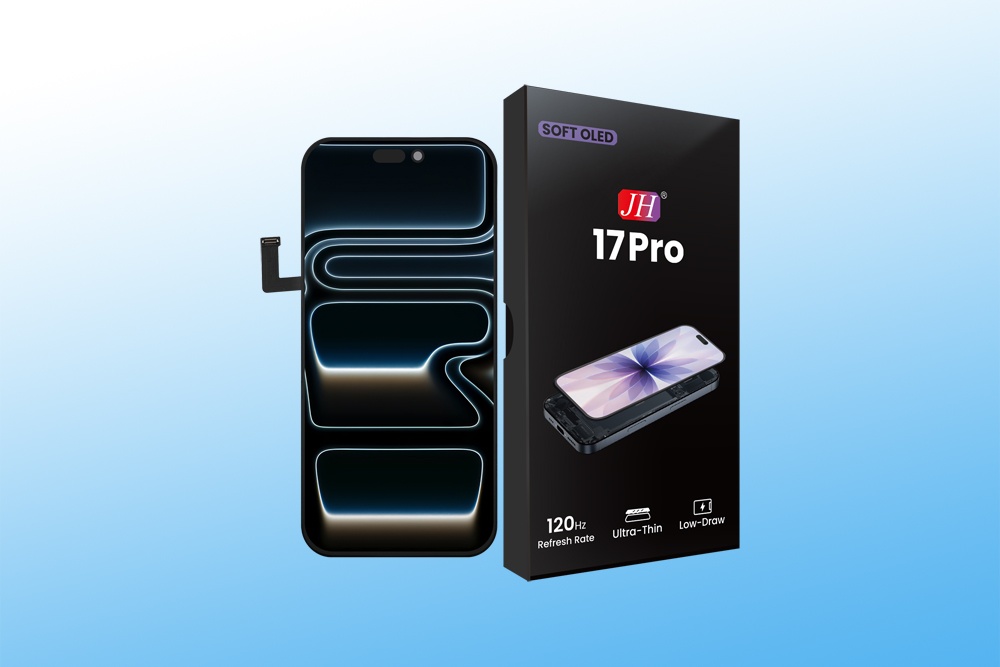
Soft OLED (also known as flexible OLED) panels differ fundamentally from traditional rigid OLEDs or LCDs in both construction and behavior. Whereas LCDs use a uniform backlight with liquid crystals modulating light passage, OLED panels are emissive—each pixel generates its own light independently. This allows for perfect blacks and infinite contrast ratios, but it also introduces unique calibration challenges.
In soft OLED panels, the thin-film transistors (TFTs) that drive each pixel exhibit significant variability from pixel to pixel. Unlike LCD panels, where gamma characteristics remain relatively consistent across pixels, each pixel in an OLED panel can have its own unique gamma response curve. This inherent pixel-to-pixel variation is the fundamental reason why gamma programming becomes not just important but absolutely necessary for iPhone’s soft OLED displays.
Why iPhone Requires Precision Gamma Programming
1. Achieving Industry-Leading Color Accuracy
Apple has long prioritized color accuracy as a defining feature of iPhone displays. The company’s Super Retina and Super Retina XDR displays are engineered to meet exceptionally high standards of color fidelity. To achieve this, the gamma curve must be precisely calibrated to match Apple’s target specifications.
The iPhone uses a custom color space known as Display P3. While this color space shares the same wide color gamut as the cinema-standard DCI-P3, it employs a gamma value of 2.6 rather than the 2.2 gamma used in standard DCI-P3. This subtle but important difference reflects Apple’s careful consideration of how users perceive colors under typical mobile viewing conditions—often in varying ambient light environments, with the display held at different distances and angles.
The results of this meticulous gamma tuning speak for themselves. Professional testing has shown that iPhone displays achieve remarkable Absolute Color Accuracy scores, with color errors typically falling below the 1 JNCD (Just Noticeable Color Difference) threshold—meaning the average human eye cannot distinguish displayed colors from perfect reference colors.
2. Compensating for Pixel-to-Pixel Variability
The manufacturing process for soft OLED panels inevitably produces small variations in the performance of individual pixels. Some pixels may emit slightly more or less light than intended when given the same driving voltage. This non-uniformity, known in the display industry as mura (the Japanese term for unevenness), can manifest as visible brightness inconsistencies across the display surface.
Gamma programming addresses this challenge through a process called De-Mura (pixel uniformity correction). During manufacturing, each display panel undergoes optical measurement to detect luminance variations at multiple gray levels. Correction coefficients are then calculated for every pixel and stored in the display driver IC. The complexity of this process is substantial: OLED panels typically require 9 to 12 gamma curves at a single frequency to cover the entire brightness range, with each curve containing 15 to 27 adjustment nodes.
This per-pixel gamma calibration ensures that regardless of manufacturing variations, every iPhone display—whether produced in the first batch or the millionth—delivers uniform, consistent image quality.
3. Compensating for OLED Aging and Burn-In
Unlike LCDs, OLED materials degrade over time. The organic compounds that emit light gradually lose efficiency, resulting in reduced luminance as the display ages. Moreover, different subpixel colors (red, green, and blue) age at different rates, which can cause color temperature drift over extended use.
Gamma programming provides a dynamic solution to this aging problem. Apple has engineered its Super Retina displays with special algorithms that monitor the usage of individual pixels to produce display calibration data. Your iPhone uses this data to automatically adjust brightness levels for each pixel as needed, compensating for burn-in effects and maintaining a consistent viewing experience throughout the device’s lifespan.
This dynamic gamma adjustment can be implemented through multiple gamma profiles stored in the display driver IC, with the system selecting the appropriate profile based on accumulated usage data such as operating time and historical brightness levels.
4. Maintaining Uniformity Across Multiple Gray Levels
A display that looks perfect at maximum brightness may still exhibit visible issues at lower brightness levels if gamma calibration is insufficient. The relationship between digital gray level and actual luminance must remain consistent across the entire brightness spectrum.
Gamma tuning must cover the full brightness range of the panel, from deep blacks to peak whites. Traditional calibration methods often struggle, particularly at low gray levels where lateral current leakage between adjacent pixels can affect brightness and color accuracy. Advanced gamma programming techniques—including machine learning models that predict optimal initial register values—are increasingly employed to accelerate this calibration while maintaining precision.
5. Optimizing for Human Visual Perception
Beyond technical measurements, gamma programming is fundamentally about human visual experience. The gamma curve determines how smoothly brightness transitions appear to the human eye, affecting everything from shadow detail to highlight retention.
Research has demonstrated that displays with optimized gamma values significantly enhance sunlight readability and image quality. For iPhone users who regularly use their devices in conditions ranging from pitch-dark bedrooms to bright outdoor environments, proper gamma calibration ensures that on-screen content remains legible and visually pleasing regardless of ambient lighting.
The Gamma Tuning Process: How It Works in Production
The gamma tuning process for iPhone soft OLED displays involves several sophisticated steps:
Step 1: Optical Measurement. Each display panel is placed under external optical equipment that measures luminance output across multiple gray levels.
Step 2: Curve Generation. Based on these measurements, gamma curves are generated for the entire brightness range—typically 9 to 12 curves per frequency.
Step 3: Per-Pixel Correction. For displays requiring pixel-level uniformity, De-Mura algorithms calculate individual correction factors for each pixel using high-resolution camera imaging and image processing algorithms.
Step 4: Data Storage. The calibrated gamma parameters and correction coefficients are stored in the display driver IC’s memory, where they can be accessed during normal operation.
Step 5: Dynamic Compensation. Throughout the display’s lifetime, the system continuously monitors usage and adjusts gamma parameters as needed to compensate for degradation.
What Sets iPhone Apart
Many smartphone manufacturers perform gamma calibration, but Apple’s approach is distinguished by several factors:
Tight Hardware-Software Integration. Apple controls both the hardware and software stack, allowing for seamless integration between gamma calibration and iOS’s color management system. This integration is so precise that aftermarket OLED displays—which may introduce slight variations in gamma curve stability—often fail to match Apple’s system-level expectations.
Per-Pixel Burn-In Compensation. Apple’s algorithms monitor individual pixel usage and adjust calibration data accordingly, going beyond the industry standard of static gamma tuning.
Stringent Quality Standards. Apple’s calibration profiles are tightly controlled to meet exacting specifications, ensuring that every display—from the earliest production units to the latest—delivers consistent quality.
Conclusion
Gamma programming on soft OLED iPhone screens is not merely a technical checkbox—it is the fundamental process that transforms raw OLED panels into the industry-leading displays for which iPhones are renowned. By addressing pixel-to-pixel variability, compensating for OLED aging, achieving elite-level color accuracy, and optimizing for human visual perception, gamma tuning ensures that every image, video, and interface element appears precisely as Apple’s designers intended.
As display technology continues to evolve, gamma calibration will remain at the heart of premium display quality. For iPhone users, this invisible engineering delivers tangible benefits: truer colors, smoother gradients, longer-lasting performance, and a viewing experience that sets the standard for the smartphone industry.