

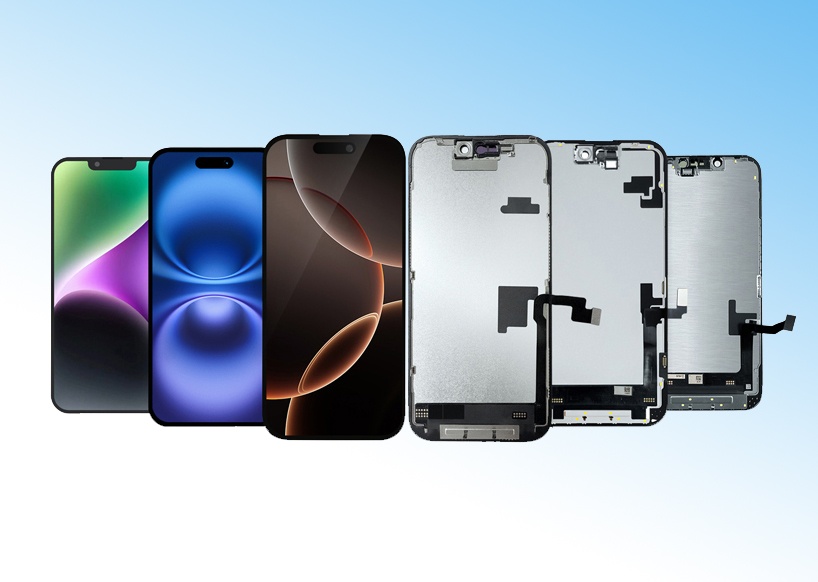
In September 2017, when the full-screen of the iPhone X first lit up on the giant screen of the Steve Jobs Theater, no one realized that this was not just the launch of a new phone, but a watershed moment in the history of smartphone displays. From that 5.8-inch OLED full screen to the rumored upcoming all‑system 120Hz high refresh rate and ultra‑narrow bezels of the iPhone 17, Apple has completed a screen revolution in eight years: from LCD to OLED, from 60Hz to 120Hz, from 625 nits to 2000 nits.
This article will take you through the evolution of every iPhone screen generation from iPhone X to iPhone 17 – size, resolution, brightness, refresh rate, display technology, form factor design – leaving nothing out. The text is carefully laid out with Google‑SEO‑friendly keywords, suitable for every reader who wants to deeply understand the history of iPhone screens.
Chapter 1 (2017): A Milestone Beginning – iPhone X and the Dawn of the OLED Era
Before 2017, iPhone screens had never left the LCD camp. From the original iPhone in 2007 to the iPhone 8 in 2017, all used LCD panels. In 2016, Apple announced orders for OLED screens worth tens of billions of dollars, shaking the entire panel industry. On September 13, 2017, at the Steve Jobs Theater in Cupertino, Apple held its autumn keynote and officially introduced the iPhone X (iPhone 10) – a special model commemorating the tenth anniversary of the iPhone. At the same time, the iPhone 8 and iPhone 8 Plus still stuck with LCD, marking Apple’s first trial of OLED at a product‑tier level.
Specification Highlights
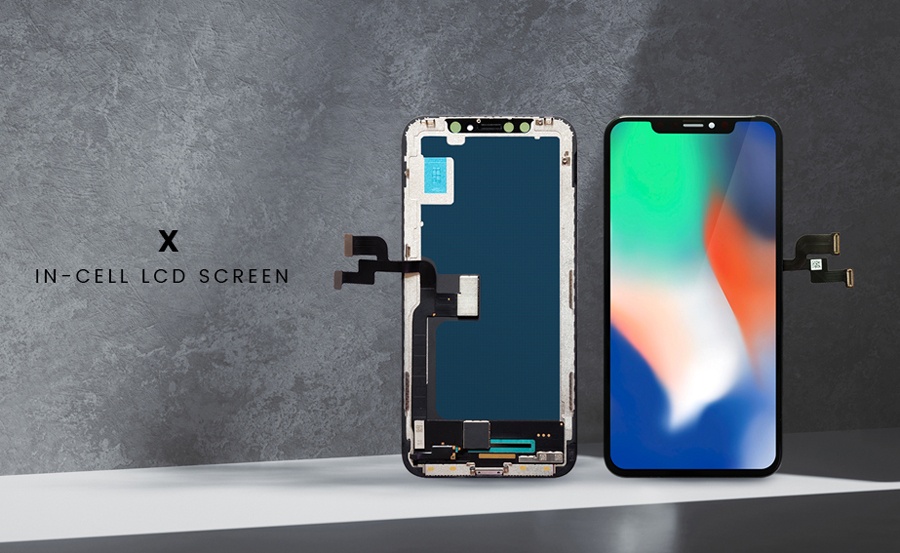
The iPhone X featured a 5.8‑inch OLED full screen, which Apple named “Super Retina Display.” Its resolution was 2436 × 1125 pixels, with 458 pixels per inch – the highest specification in any iPhone at the time. The most critical parameter was contrast ratio: 1,000,000:1. In comparison, the LCD screen of the contemporary iPhone 8 had a contrast ratio of only 1400:1. The self‑emissive nature of OLED technology made black areas purely dark – pixels could be turned off completely to achieve true black – giving the iPhone X unprecedented light and shadow quality when showing HDR content.
In terms of brightness, the iPhone X had a maximum typical brightness of 625 nits, supported HDR display, True Tone technology, and wide colour gamut (P3). It also supported both HDR10 and Dolby Vision HDR standards. More importantly, the iPhone X retained 3D Touch – Apple’s pressure‑sensitive touch technology.
Design Changes
The screen of the iPhone X used rounded corners enclosed within a standard rectangle. Apple’s official 5.8‑inch measurement is the standard rectangle value; the actual viewable area is slightly smaller. The “notch” (recessed area) housed the TrueDepth camera system – the key hardware for Face ID – embedding five sensors. This top notch design caused great controversy at the time but eventually became the iconic design language of iPhones for the next five years.
Industry Significance
The iPhone X was the first iPhone to adopt an OLED screen, thus beginning Apple’s full embrace of OLED. It was also a true “full‑screen” iPhone, completely removing the Home button and Touch ID, and adopting Face ID as the primary biometric authentication method. From that moment on, the smartphone industry officially bid farewell to “chins” and “foreheads” and entered the full‑screen era.
Chapter 2 (2018): A Big Leap in Screen Size – The 6.5‑inch iPhone XS Max
If the 2017 iPhone X laid the foundation for OLED, then the 2018 iPhone XS series was the year of comprehensive OLED refinement. Apple released three models that year: the iPhone XS (5.8‑inch OLED), the iPhone XS Max (6.5‑inch OLED), and the iPhone XR (6.1‑inch LCD, focusing on value for money).
Specifications
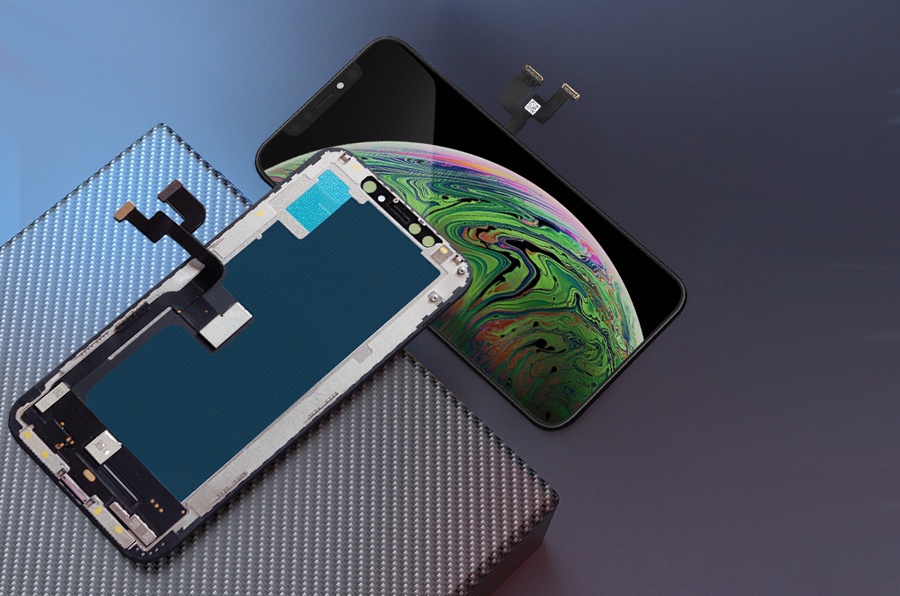
The iPhone XS Max featured a 6.5‑inch Super Retina Display with a resolution of 2688 × 1242 pixels, still 458 ppi pixel density, and a contrast ratio of 1,000,000:1. Typical brightness remained 625 nits. The iPhone XS continued with the 5.8‑inch, 2436 × 1125 resolution specification, with identical pixel density.
Key Improvements
A core upgrade of the iPhone XS series screen was the adoption of a more advanced OLED panel technology – Samsung supplied Apple with Y‑Octa technology, making the panel thinner and touch response faster. In addition, the IP68 rating of the iPhone XS series was improved, allowing it to remain under water up to 2 metres deep for up to 30 minutes. The larger screen brought a higher screen‑to‑body ratio – the 6.5‑inch OLED full screen of the iPhone XS Max covered almost the entire front of the device, greatly enhancing visual immersion.
Differentiation Strategy
Notably, the same year’s iPhone XR used a 6.1‑inch LCD Liquid Retina display (1792 × 828 resolution, 326 ppi). With this model, Apple tested the market’s acceptance of lower‑priced LCD products – a strategy that continued for several years, allowing LCD to survive in Apple’s product line for many more years.
Chapter 3 (2019): The Birth of XDR – iPhone 11 Pro Series Defines a New Standard
2019 was a year of qualitative change in Apple’s screen naming system. On the iPhone 11 Pro and iPhone 11 Pro Max, Apple introduced the new name “Super Retina XDR” (eXtreme Dynamic Range). The term XDR had previously been used only for Apple’s high‑end professional display, the Pro Display XDR – transplanting it to the iPhone demonstrated Apple’s confidence in this screen.
Core Upgrades
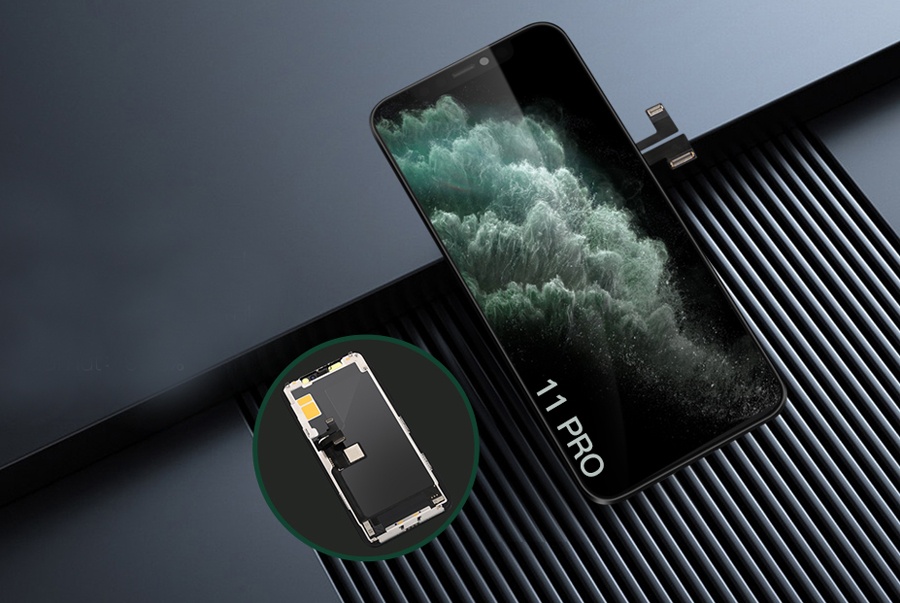
The screens of the iPhone 11 Pro and iPhone 11 Pro Max kept the same resolution and size as the previous generation (5.8‑inch / 6.5‑inch, 458 ppi), but achieved a leap in core technical parameters. Contrast ratio doubled from 1,000,000:1 to 2,000,000:1, delivering even better dark‑detail performance. In brightness, the maximum typical brightness of the iPhone 11 Pro increased from 625 nits to 800 nits, a 28% improvement over the iPhone XS. HDR peak brightness reached 1200 nits.
Technical Significance
The XDR name is not just a marketing term; it represents Apple’s ultimate pursuit of screen calibration and colour management. Apple officially stated that the Super Retina and Super Retina XDR displays incorporate more improvements than traditional OLED screens and are the first OLED screens to meet Apple’s design standards for iPhone. At the same time, the triple‑camera system of the iPhone 11 Pro worked in concert with the screen, making the quality of photography and previews – with Deep Fusion and Smart HDR – unprecedented consistent.
Chapter 4 (2020): New Height in Size – iPhone 12 Pro Max’s 6.7 Inches and Ceramic Shield
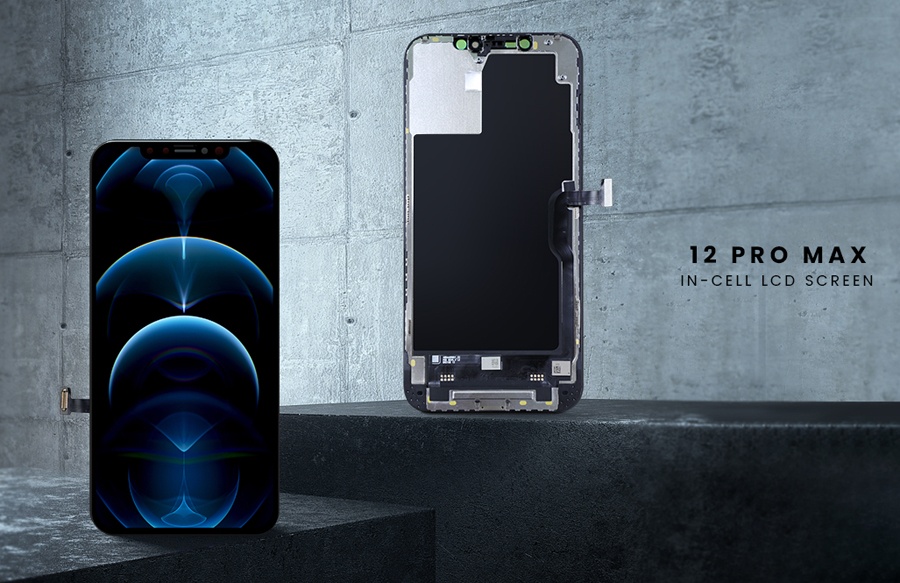
The iPhone 12 series, released in 2020, was another highlight moment for screen technology. Starting this year, Apple made major breakthroughs in three areas simultaneously: brightness, durability, and size.
Screen Specifications
The iPhone 12 Pro Max featured a 6.7‑inch Super Retina XDR display with a resolution of 2778 × 1284 pixels, 458 ppi pixel density, a contrast ratio of 2,000,000:1, typical brightness of 800 nits, and HDR peak brightness of 1200 nits. The iPhone 12 Pro had a 6.1‑inch, 2532 × 1170 resolution with 460 ppi.
Ceramic Shield
The biggest screen innovation of the iPhone 12 series did not come from the OLED panel itself, but from the protective glass layer covering the screen – Ceramic Shield. Apple claimed that this exclusive glass technology, developed in cooperation with Corning, incorporates nano‑ceramic crystals into the glass matrix, improving drop performance by four times – tougher than any smartphone glass released to date. The introduction of this technology greatly enhanced the durability of the iPhone.
Industrial Design Change
The iPhone 12 series also adopted an entirely new exterior design – a return to the flat metal frame of the iPhone 4, with a cleaner transition between the screen and the body. The screen also became flatter – from the 2.5D curved glass since the iPhone X to a completely flat glass panel, laying the foundation for future screen protectors and durability optimizations.
Chapter 5 (2021): The First Year of High Refresh Rate – iPhone 13 Pro and ProMotion 120Hz
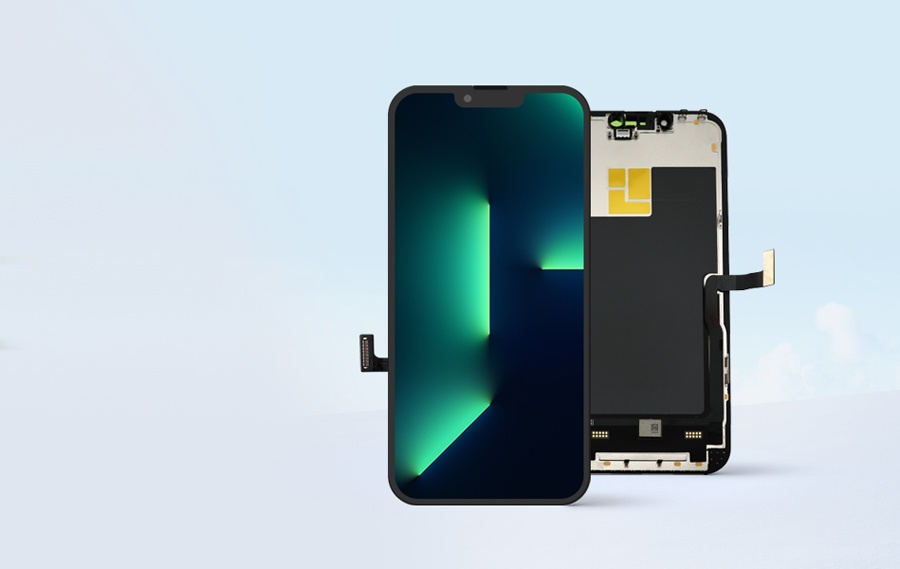
2021 was the most important technological leap in the history of iPhone screens. Apple finally brought the ProMotion adaptive refresh rate technology, long proven on the iPad Pro, to the iPhone.
Introduction of LTPO Technology
To enable a high refresh rate on a phone screen without sacrificing battery life, a new OLED backplane technology was essential – LTPO (Low‑Temperature Polycrystalline Oxide). LTPO is a new type of display panel substrate that differs from traditional LTPS (Low‑Temperature Polycrystalline Silicon). By adding an oxide layer, it reduces the energy required to excite pixels, thereby lowering the power consumption of the display. Apple had already applied this technology in the Apple Watch Series 5.
Analysts such as Ross Young predicted that if the iPhone wanted to support ProMotion high refresh rate, LTPO technology was a necessary prerequisite. The iPhone 13 Pro and iPhone 13 Pro Max ultimately became the first iPhone models to feature LTPO panels and 120Hz ProMotion.
Real‑World Experience
The screens of the iPhone 13 Pro and Pro Max can dynamically adjust the refresh rate between 10Hz and 120Hz, adapting automatically according to screen content – dropping to the lowest refresh rate when viewing static photos to save power, and ramping up to 120Hz when scrolling lists or playing games for extreme smoothness. The 120Hz refresh rate makes screen content change 120 times per second, and compared to previous 60Hz iPhones, the smoothness of scrolling operations is dramatically improved.
Brightness and Battery Life
The iPhone 13 series also achieved a balanced upgrade in screen brightness – the iPhone 13 raised typical brightness to 800 nits, while the iPhone 13 Pro series maintained 1000 nits typical brightness. Thanks to the low‑power characteristics of LTPO, after enabling 120Hz high refresh rate, the battery life of the iPhone 13 Pro did not show significant degradation.
Chapter 6 (2022): Cutting the Notch – Dynamic Island Changes Interaction
If previous iPhone upgrades were all about iterative parameter improvements, the 2022 iPhone 14 Pro series achieved a form factor revolution – the notch that had persisted for five years was finally replaced.
Dynamic Island: From Flaw to Highlight
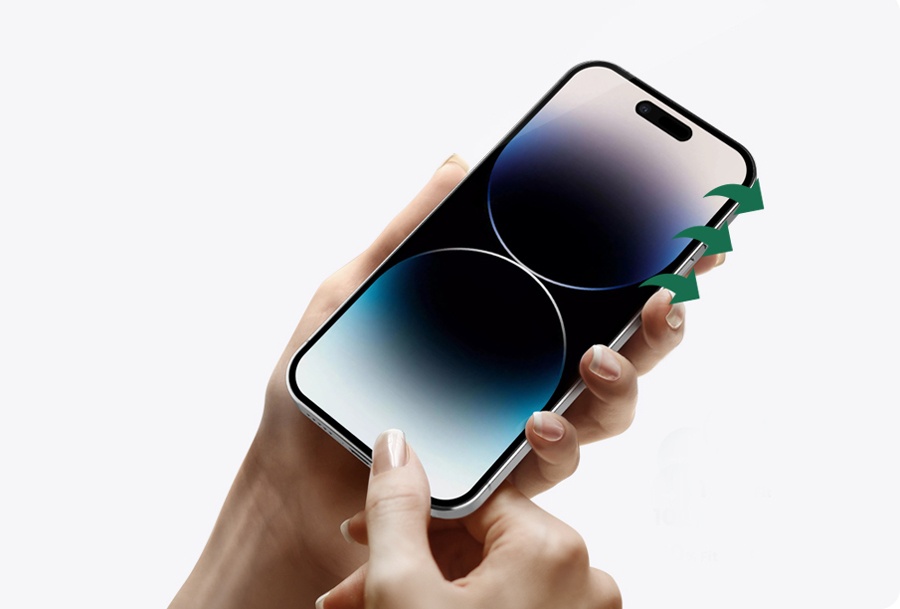
The iPhone 14 Pro and Pro Max replaced the iconic “notch” with an entirely new design – the “Dynamic Island.” Apple shrunk the TrueDepth camera system by 31% and then, through clever software design, turned this cutout area into a dynamic interactive interface. It can change shape in real time according to different use cases – music playback, navigation instructions, Face ID verification, AirDrop transfer progress – all appearing fluidly around the “Island,” breaking the boundary between hardware and software.
Always‑On Display
Another major feature of the iPhone 14 Pro series is Always‑On Display (AOD). Thanks to LTPO technology, which can lower the screen refresh rate to as low as 1Hz, after the iPhone is locked, the screen does not turn off completely but remains on at an extremely low refresh rate and extremely low brightness, displaying the time, date, widgets, and notifications. The AOD function also works with the all‑new Lock Screen in iOS 16 to show personalised wallpapers and tools – even the skin tone of a person in the wallpaper can be optimally displayed in low‑brightness mode. If users dislike AOD, they can turn it off at any time in Settings → Display & Brightness.
Brightness Milestone: 2000 nits
The screen brightness of the iPhone 14 Pro series reached an unprecedented level – typical brightness of 1000 nits, HDR peak brightness of 1600 nits, and outdoor peak brightness of 2000 nits, comparable to the Pro Display XDR’s professional display level. The 2000 nit peak brightness allows users to clearly view screen content even in strong outdoor light.
Chapter 7 (2023): Continuation of Uniform Beauty – iPhone 15 Pro’s Pixel Density Improvement
The 2023 iPhone 15 Pro series made a refined optimisation and enhancement on the basis of the iPhone 14 Pro. After two years of intensive iteration, screen technology entered a period of steady development.
Parameter Tweaks
The screen size of the iPhone 15 Pro remained 6.1 inches, but the resolution was slightly adjusted from the previous generation’s 2556 × 1179 pixels, with pixel density slightly increased (still around 460 ppi), and a contrast ratio of 2,000,000:1. The iPhone 15 Pro Max kept a 6.7‑inch, 2796 × 1290 resolution with 460 ppi. Both Pro models retained the Dynamic Island design, Always‑On Display, and ProMotion 120Hz adaptive refresh rate.
Brightness System
The brightness of the iPhone 15 Pro series reached a new level – 1000 nits maximum typical brightness (indoor daily use), 1600 nits peak brightness (HDR content), and 2000 nits peak brightness (outdoor use). The establishment of this multi‑level brightness system allows the iPhone to automatically adapt the optimal brightness in different ambient light conditions.
Narrower Bezels Trend
The black borders of the iPhone 15 Pro series were narrower than the previous generation, further increasing the screen‑to‑body ratio. In terms of screen manufacturing, Samsung supplied the iPhone 15 Pro series with the new generation M14 OLED material, resulting in small improvements in colour gamut coverage and brightness uniformity. Apple also introduced an oleophobic anti‑fingerprint coating on the display of the iPhone 15 Pro series for the first time.
Competitive Landscape
It is worth noting that by 2023, the Android camp had already taken a more aggressive path in screen specifications – technologies such as high‑frequency PWM dimming, higher refresh rates, and brighter peak brightness were emerging everywhere. Yet the iPhone 15 Pro still adhered to its relatively conservative but exceptionally refined route, emphasising colour accuracy and system‑level software‑hardware coordination.
Chapter 8 (2024): Pursuit of Ultra‑Narrow Bezels – iPhone 16 Pro and BRS Technology
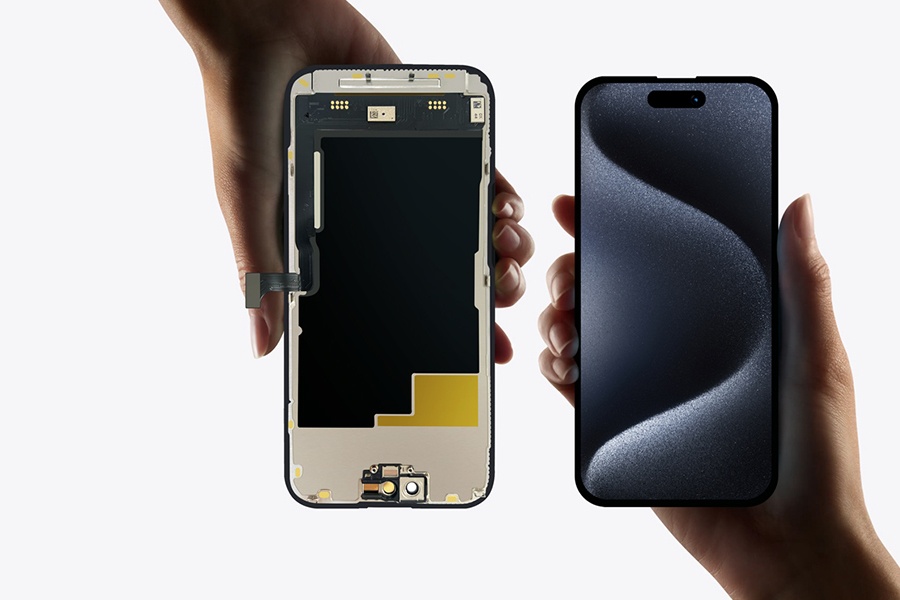
The 2024 iPhone 16 Pro series pushed the limits of screen bezels. Building on the narrow bezels of the iPhone 15 Pro series, the iPhone 16 Pro series used an all‑new BRS technology to compress bezels to the industry’s extreme.
BRS Narrow‑Bezel Technology
BRS stands for Border Reduction Structure, a screen packaging technology developed in‑house by Apple. Its core principle is to make the arrangement of the underlying drive circuits more compact and efficient, thereby significantly reducing bezel width without affecting screen performance or the overall shape of the device. This technology allows Apple to increase screen size while keeping the physical body size largely unchanged.
Record‑Breaking Bezel Width
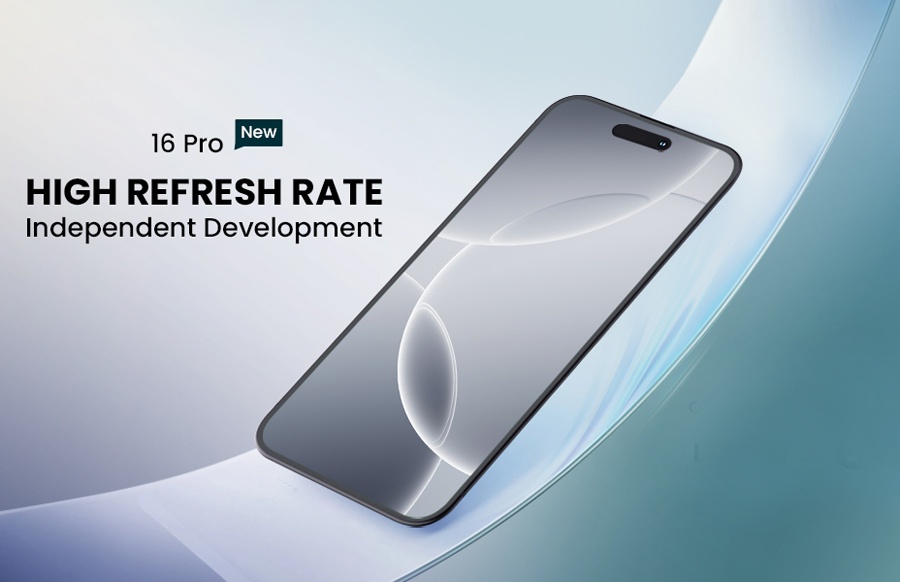
With the help of BRS technology, the screen bezels of the iPhone 16 Pro were reduced to about 1.2 mm, and the iPhone 16 Pro Max achieved the world’s narrowest at about 1.15 mm. These figures set new records for smartphone bezels globally.
Screen Size Increases Again
Thanks to the compact design enabled by the ultra‑narrow bezels, the screen sizes of the iPhone 16 Pro series saw a significant increase – the iPhone 16 Pro grew from 6.1 inches to 6.3 inches, and the iPhone 16 Pro Max grew from 6.7 inches to 6.9 inches, setting the record for the largest screen size in iPhone history.
BOE’s Moment of Glory
The 2024 iPhone 16 series was a highlight moment for BOE as a Chinese OLED panel manufacturer. Before the release of the iPhone 16, Apple’s OLED screens mainly relied on two suppliers – Samsung (about 50% market share) and LG (about 30%). Although BOE became an Apple supplier as early as 2017, it only provided screens for iPads, MacBooks, and Apple Watches at first. By the time of the iPhone 12, BOE began to supply OLED screens for iPhones, but mostly for refurbished units and after‑service replacement screens. With the iPhone 13, BOE supplied OLED panels for the standard 6.1‑inch model, but its screens were not used in the initial new product launch.
Only with the iPhone 16 did BOE finally stand on equal footing with Samsung and LG – BOE, along with Samsung and LG, was listed as a first‑wave OLED screen supplier for the iPhone 16. Specifically, Samsung supplied screens for all four iPhone 16 models, LG mainly provided high‑spec LTPO panels for the Pro and Pro Max models, and BOE was primarily responsible for the 60Hz OLED screens for the standard iPhone 16 and iPhone 16 Plus. However, the Pro models equipped with ProMotion high refresh rate were still mainly supplied by Samsung and LG.
Brightness Remains Stable
In terms of brightness, the iPhone 16 Pro series maintained the same brightness system as the iPhone 15 Pro series – typical brightness of 1000 nits, HDR peak brightness of 1600 nits, outdoor peak brightness of 2000 nits. The screen refresh rate remained ProMotion 120Hz, with the standard models still at 60Hz.
Chapter 9 (2025): Full‑Line High Refresh Rate – The Comprehensive Breakthrough of iPhone 17
Looking ahead to 2025, the iPhone 17 series is expected to undergo a far‑reaching iterative upgrade in screen parameters and specifications. Although the iPhone 17 has not yet been officially released, much information from the supply chain, analysts, and leakers has already outlined a clear picture.
All‑Line 120Hz ProMotion
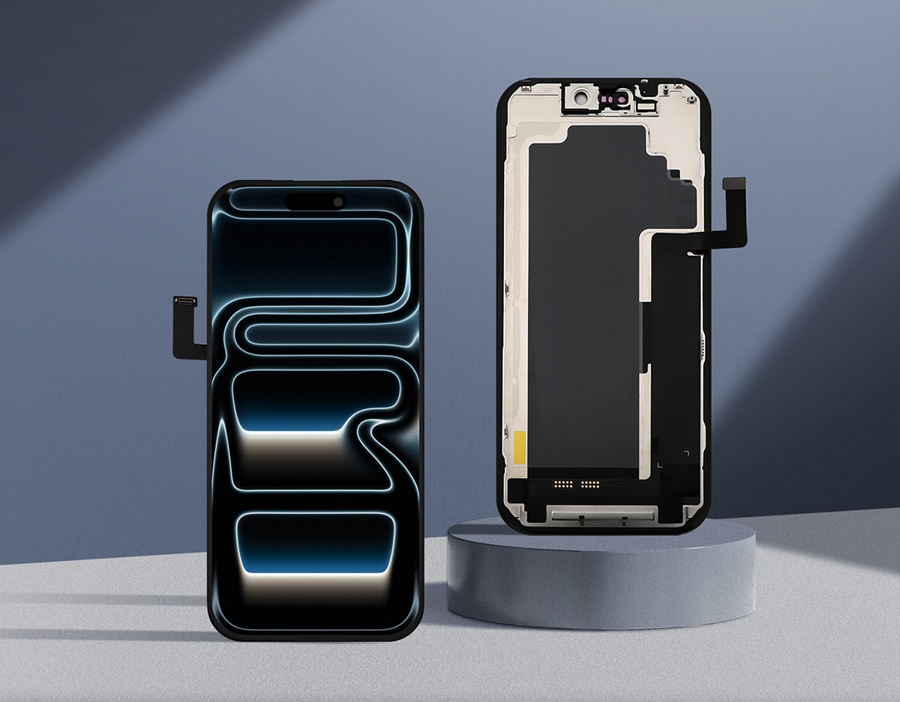
This is the most significant change for the iPhone 17 series – all four models (iPhone 17, iPhone 17 Pro, iPhone 17 Pro Max, and the new iPhone 17 Air) are expected to fully support 120Hz ProMotion adaptive refresh rate. In previous iPhone lineups, ProMotion high refresh rate had always been exclusive to Pro models. Standard iPhones have long remained at a 60Hz refresh rate, which in the Android camp (where similarly priced Android phones have fully embraced 120Hz or even 165Hz high refresh rates by 2024) has become a notable disadvantage. The iPhone 17 standard model may become an important turning point – it will reportedly feature 120Hz ProMotion adaptive refresh rate technology for the first time.
Standard Model Screen Size Increase
In terms of screen size, the iPhone 17 standard model will achieve a significant upgrade – from the current 6.1 inches (about 6.12 inches) to 6.27 inches (about 6.3 inches), matching the screen size of the iPhone 16 Pro. This change means that the 2024 iPhone 16 standard model may be the last generation of basic iPhones with a 6.1‑inch screen. The screen sizes of the iPhone 17 Pro and iPhone 17 Pro Max are expected to remain the same as the iPhone 16 Pro series, approximately 6.3 inches and 6.9 inches, respectively.
Dynamic Island Narrowing and Peak Brightness Increase
According to multiple sources, the Dynamic Island on the iPhone 17 series will be further narrowed – from about 2 cm currently to about 1.5 cm, making the visual wholeness of the screen even more prominent. In terms of brightness, a new generation of emissive materials is expected to push peak brightness to a higher level (some predictions suggest that the standard model’s peak brightness could soar to 2500 nits, but official mass‑production specifications are not yet confirmed).
More Aggressive All‑Line High Refresh Strategy
Some more aggressive leaks suggest that Apple may adopt a full‑line 120Hz strategy for the iPhone 17 – including the standard model and the Air model. However, the ProMotion adaptive refresh rate feature on the Pro versions will provide more granular refresh rate adjustment capabilities, dynamically tuning according to different application scenarios, thereby delivering a better user experience. The standard model may only feature a regular 120Hz fixed refresh rate, rather than the Pro version’s adaptive adjustment scheme.
Chapter 10 (Ten‑Year Technical Overview): Key Evolutionary Trends of iPhone Screens
Over nearly a decade of evolution, iPhone screens have achieved qualitative leaps in the following core dimensions:
1. Display Technology: Complete Transition from LCD to OLED
Apple first used an OLED panel in the 2017 iPhone X, and then gradually transitioned all high‑end iPhone models from LCD to OLED. By 2024, even the standard iPhone models fully use OLED. According to Nikkei news reports, as older iPhones phase out of sale, the proportion of LCD panels in iPhones will gradually drop to zero. In the early LCD era, important suppliers such as Sharp and Japan Display Inc. (JDI) delivered nearly 200 million LCD screens each year for iPhones; by 2023, that number had fallen to about 20 million.
2. Screen Size: Continuous Expansion
Starting from the 5.8‑inch iPhone X, to the 6.7‑inch iPhone 12 Pro Max, to the 6.9‑inch iPhone 16 Pro Max (rumoured), iPhone screen sizes have undergone a steady and continuous growth. The standard iPhone has also grown from the small 4.7‑inch size to 6.1 inches, and may further expand to 6.3 inches on the iPhone 17.
3. Screen Brightness: From 625 to 2000 Nits
The typical brightness of the iPhone X was only 625 nits. By the iPhone 12 series it increased to 800 nits, the iPhone 13 Pro series maintained 1000 nits typical brightness, and the iPhone 14 Pro achieved an outdoor peak brightness of 2000 nits for the first time. By 2024, some Android flagships had exceeded 3000 nits, but Apple remains industry‑leading in brightness uniformity and colour accuracy.
4. Refresh Rate: From 60Hz to 120Hz ProMotion
From the iPhone X to the iPhone 12 series, iPhones stayed at a 60Hz refresh rate. In 2021, the iPhone 13 Pro series introduced 120Hz ProMotion for the first time, and it has continued through the iPhone 16 Pro series. The iPhone 17 series is expected to bring 120Hz to the entire lineup, completing the full coverage of high refresh rate.
5. Screen Form Factor: From Notch to Dynamic Island
From 2017 to 2021, the iPhone’s notch design lasted for five years. In 2022, the iPhone 14 Pro series replaced the notch with the Dynamic Island, integrating the hardware cutout with software interaction. Narrow‑bezel technology has also continuously evolved – from the bezel thickness of the iPhone X to the 1.2 mm ultra‑narrow bezels of the iPhone 16 Pro, screen‑to‑body ratios have steadily climbed.
6. Supplier Landscape: From Samsung Dominance to Tripartite Rivalry
In the early days, iPhone OLED screens were supplied exclusively by Samsung. Over time, Apple gradually expanded its supplier base to include LG and BOE. In 2020, Samsung accounted for about 78% of the iPhone OLED market, and foreign media predicted that in 2021 the share of Samsung screens used by Apple would drop to 65%. By 2024, Samsung had about 50%, LG about 30%, and BOE about 20%. BOE went from supplying only after‑market replacement screens to being a first‑wave supplier for the mass‑produced iPhone 16, finally standing on equal footing with Samsung and LG.
7. The Controversy and Persistence of PWM Dimming
Regarding the dimming strategy of OLED screens, Apple has always been a point of controversy. From the 2017 iPhone X to the 2024 iPhone 16, Apple has consistently used low‑frequency PWM dimming (about 480Hz). In the Android camp, high‑frequency PWM dimming (3840Hz or even higher) and DC dimming have become widespread on flagship models. Apple’s consideration is that although high‑frequency PWM or DC dimming may be better, they could affect system battery life and screen colour calibration. Apple chooses to prioritise colour accuracy, waiting for a more perfect dimming solution to emerge.
Chapter 11 (Future Outlook): The Eve of Foldable Screens?
With iPhone screen sizes already reaching 6.9 inches (Pro Max series) and technologies such as high refresh rate, high brightness, and ultra‑narrow bezels maturing, Apple’s next screen evolution direction may be foldable screens. Apple holds a large number of patents related to foldable screen technology – Apple’s patents suggest that a foldable iPhone might adopt a bi‑fold design. However, Apple has always been a technology mature‑r rather than a first mover. Only when the technical maturity of foldable screens (especially screen crease, hinge reliability, and software adaptation) meets Apple’s quality standards will we possibly see the first foldable iPhone.
At the same time, “notch‑free” and “cutout‑free” screens may be another direction – once under‑panel Face ID and under‑panel camera technology mature, the iPhone could achieve a true full‑screen design without any cutouts. In the area of eye protection, Apple may introduce more advanced dimming technologies in future iPhones to address the growing user concern about visual health.
Conclusion
From the first OLED full screen of the iPhone X, to the first 120Hz high refresh rate of the iPhone 13 Pro, to the Dynamic Island and 2000 nit brightness of the iPhone 14 Pro, to the world’s narrowest 1.15 mm bezels of the iPhone 16 Pro, and the prediction of all‑line high refresh rate for the iPhone 17 – every step of iPhone screen evolution has precisely landed at the intersection of technology and user experience. Apple’s screen philosophy has never been about chasing the most aggressive specifications, but about giving users the most correct visual experience at the most appropriate time, in the most ultimate way.
That is the power of an iPhone screen – it is not just about displaying content, it is the soul of the iPhone. Looking back over these eight years, we have seen not only incremental increases of inches and nits, but also a continuous exploration of the essence of “display.” What is certain is that the history of iPhone screen evolution has not yet written its final chapter.