iPhone 11 Pro Screen History: The Arrival of XDR and the Watershed of OLED Professionalisation
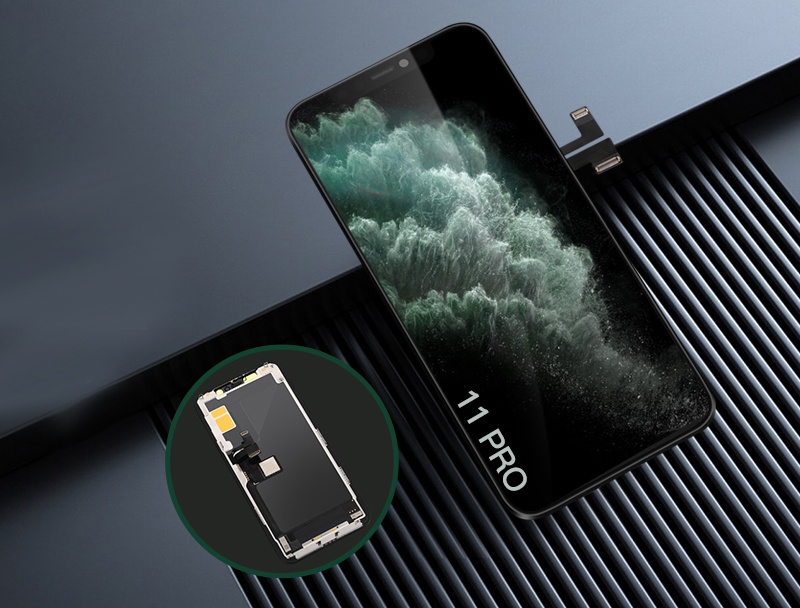
On September 10, 2019, at the Steve Jobs Theater in Cupertino, California, Apple unveiled the iPhone 11 Pro and iPhone 11 Pro Max – the first time Apple used the “Pro” naming on an iPhone line. What truly made the Pro name live up to its promise, however, was the debut of the Super Retina XDR display. The naming upgrade from “Retina” to “XDR” marked the first time Apple transplanted the standards of its $5,000 Pro Display XDR professional monitor to a mobile device.
The Arrival of XDR: The Technological Leap Behind the Name
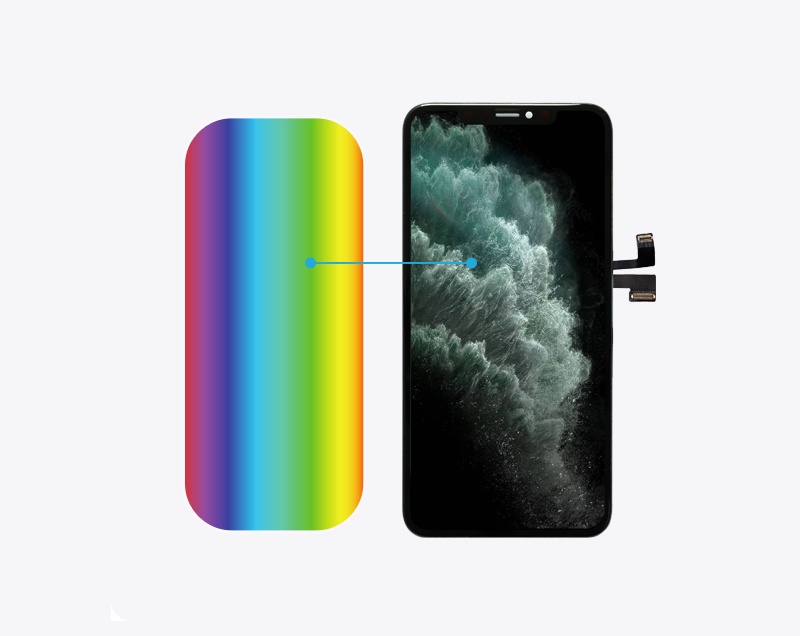
Apple’s replacement of the long‑used “Retina” with “XDR” (Extreme Dynamic Range) was far from a simple marketing move – it signified a generational leap in display specifications. The contrast ratio of the iPhone 11 Pro series screen doubled from 1,000,000:1 on the iPhone XS to 2,000,000:1. An even bigger breakthrough came in brightness: typical maximum brightness jumped from 625 nits on the previous generation to 800 nits, while HDR peak brightness reached 1,200 nits. At the time, this was an unprecedented brightness level for an iPhone OLED screen, bringing the display of Dolby Vision and HDR10 content to new heights.
At the same time, while significantly improving screen quality, Apple also achieved a breakthrough in energy efficiency – Apple officially stated that the Super Retina XDR improved energy efficiency by about 15% compared to the previous generation, thanks to optimised communication between the display driver and the panel, more efficient OLED materials, and more advanced pixel arrangement schemes.
Core Specifications and Design Language
The iPhone 11 Pro features a 5.8‑inch OLED full screen with a resolution of 2436 × 1125 pixels and a pixel density of 458 ppi; the Pro Max features a 6.5‑inch OLED full screen with a resolution of 2688 × 1242 pixels, also maintaining the 458 ppi Super Retina standard. Both models support P3 wide colour gamut and True Tone technology. The screens have an oleophobic anti‑fingerprint coating, and the entire series achieves an IP68 water resistance rating, withstanding submersion up to 4 metres for up to 30 minutes. This was also the last generation of Pro iPhones to feature a stainless steel frame and a glossy glass back.
DisplayMate A+ Rating: Textbook‑Perfect Calibration
The screen of the iPhone 11 Pro Max was tested by DisplayMate, a professional screen testing organisation, receiving “the highest ever A+ rating” and being described as having “near‑textbook‑perfect calibration and performance.”
Several key data points support this top rating. First, absolute colour accuracy: the JNCD (Just Noticeable Color Difference) reached an astonishing 0.9 – DisplayMate noted that colour differences below 1 JNCD are visually indistinguishable. Apple uses Precision Factory Display Calibration, ensuring that every iPhone 11 Pro leaves the factory with near‑perfect colour consistency. Second, brightness performance: full‑screen peak brightness reaches 821 nits at 50% APL (Average Picture Level) and 770 nits at 100% APL. Screen reflectance was further reduced to 4.5%, maintaining excellent readability even under direct outdoor sunlight.
DisplayMate commented that the iPhone 11 Pro Max’s screen “is almost certainly significantly better than your existing smartphone, 4K UHD TV, tablet, laptop, and computer monitor.”
Interaction Change: The End of 3D Touch and the Rise of Haptic Touch
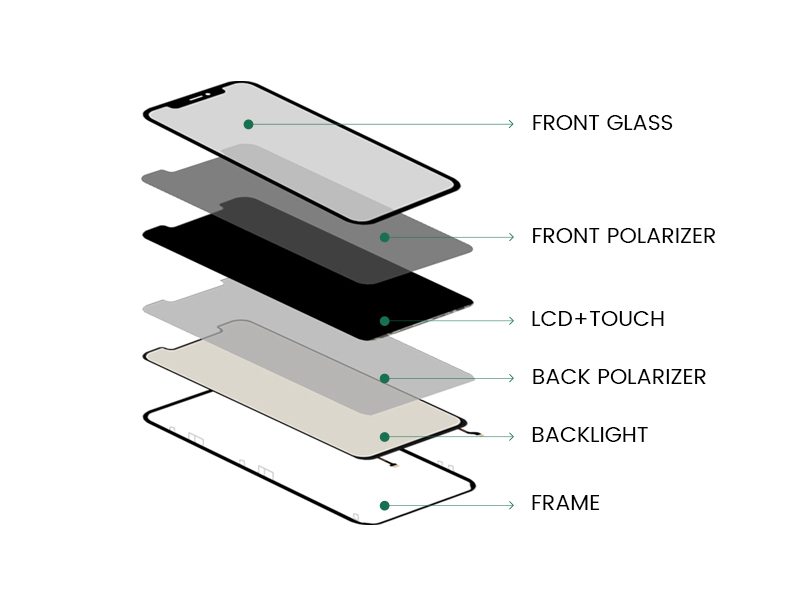
The iPhone 11 Pro series made a major directional change in interaction – it completely removed 3D Touch and replaced it with Haptic Touch. Before this, 3D Touch had been an important differentiating feature on high‑end iPhones, enabling quick actions through pressure sensitivity. However, this feature required an additional pressure‑sensing layer, occupying screen module thickness and internal space. After removing 3D Touch, the freed‑up space allowed for the A13 chip and a larger battery, resulting in about 4 hours of additional battery life on the iPhone 11 Pro compared to the iPhone XS. As a replacement, users simply long‑press to bring up the same quick action menus, achieving a smooth functional transition.
Supply Chain and Technology Evolution
The OLED screens for the iPhone 11 Pro series were still mainly supplied by Samsung Display. Due to the significantly better‑than‑expected sales of the iPhone 11 Pro series, Samsung had to urgently increase its OLED panel supply from 6.9 million units to 9.9 million units in September 2019 – an increase of about 40%.
At the panel technology level, the iPhone 11 Pro used Samsung’s M9 material grade OLED panel. Notably, this was the same material grade used in the Samsung Galaxy S10 and Note 10 from the same period. Unlike the custom “LT2” panels used in the iPhone X and XS series, this indicated that Apple had found the quality of Samsung’s current mass‑production panels to meet its high custom standards. In addition, LG began supplying a small number of OLED panels for the iPhone 11 Pro Max, marking Apple’s first step in introducing a second OLED supplier to diversify risk.
Connecting Past and Future: Re‑evaluating Its Historical Position
The iPhone 11 Pro screen holds an irreplaceable and critical position in the evolution of iPhone screens.
From a legacy perspective, it inherited the OLED full‑screen design from the iPhone X, continued the high‑resolution standard of 458 ppi, and for the first time brought the XDR professional display standard to a mobile device. From an innovative perspective, its parameters – the balance of brightness, the contrast breakthrough, the energy efficiency optimisation, and the unification of Haptic Touch interaction – laid a clear foundational template for the Ceramic Shield of the iPhone 12, the 120Hz ProMotion of the iPhone 13 Pro, and the 2,000‑nit peak brightness of the iPhone 14 Pro.
Looking at the specifications today, the iPhone 11 Pro’s 800 nits and 2,000,000:1 contrast ratio may no longer be top‑tier. But the XDR screen of 2019 carries a meaning far beyond the numbers – it was both the defining work that set the course for Apple’s OLED professionalisation and a sign of the qualitative shift from “good enough” to “professional” for iPhone screens. This was a visible evolution, and a visible revolution. With one screen, it proved two things at once: the technological limits of OLED were far from being reached, and the peak journey of iPhone screens had only just begun.