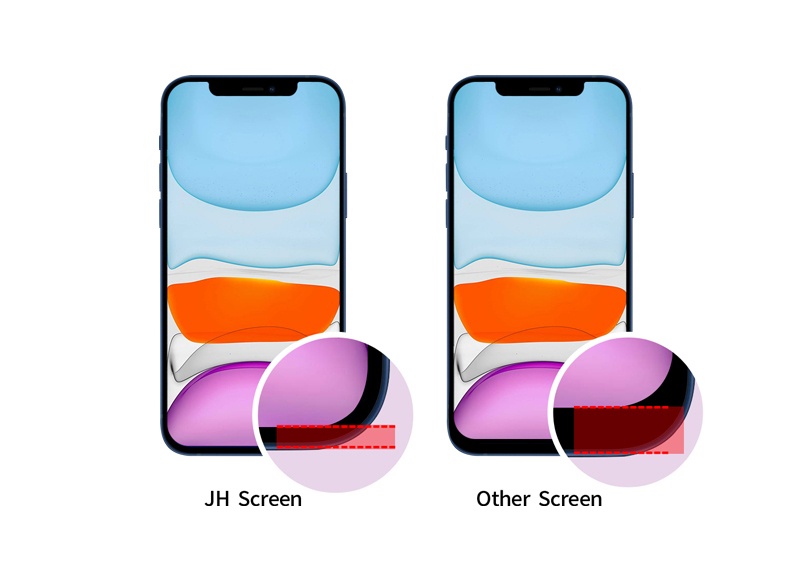
iPhone 11 Screen Evolution: The Watershed Year from LCD to XDR
On September 10, 2019, at the Steve Jobs Theater in Cupertino, California, Apple unveiled the iPhone 11 series. This generation not only introduced a triple‑camera system but also achieved Apple’s most significant naming change in screens since the transition to OLED – the Pro series debuted “Super Retina XDR” for the first time, while the standard iPhone 11 continued with the Liquid Retina LCD technology. This article will comprehensively review the historical significance of the iPhone 11 series screens from the perspectives of specifications, technological innovation, professional evaluations, and industry impact.
I. A Differentiated Product Matrix: Two Screen Technology Paths Coexist
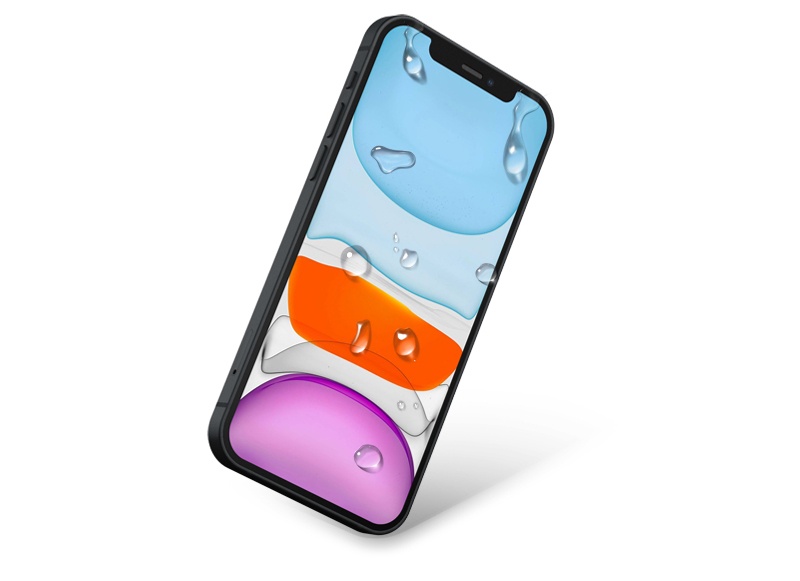
The iPhone 11 series includes three models: the iPhone 11, the iPhone 11 Pro, and the iPhone 11 Pro Max. This was a year of extremely refined product planning for Apple – using screen technology differences to achieve complete coverage from entry‑level to flagship.
The iPhone 11 Pro and Pro Max feature the Super Retina XDR display – Apple’s first time transplanting the “XDR” high‑end label from the $5,000 Pro Display XDR professional monitor to the iPhone. The iPhone 11 Pro has a 5.8‑inch OLED full screen with a resolution of 2436 × 1125 pixels and a pixel density of 458 ppi; the iPhone 11 Pro Max has a 6.5‑inch OLED full screen with a resolution of 2688 × 1242 pixels, also maintaining 458 ppi. Both Pro models achieve a striking contrast ratio of 2,000,000:1, support P3 wide colour gamut, and True Tone technology. Both Pro models feature stainless steel frames on the front, an IP68 water resistance rating, and can withstand submersion up to 4 meters for up to 30 minutes – a significant durability improvement over the previous generation.
The standard iPhone 11 uses a Liquid Retina HD Display – a 6.1‑inch LCD full screen based on IPS technology, with a resolution of 1792 × 828 pixels, a pixel density of 326 ppi, a contrast ratio of only 1400:1, and a maximum typical brightness of 625 nits. Notably, the screen specifications of the iPhone 11 are almost identical to those of the iPhone XR – 1792 × 828 resolution, 326 ppi, and 1400:1 contrast ratio are exactly the same as the iPhone XR. The body uses an aluminium frame, with an IP68 water resistance rating, allowing submersion up to 2 meters for up to 30 minutes – achieving a balance between durability and cost control.
II. The Arrival of XDR: A Screen Revolution for the Pro Models
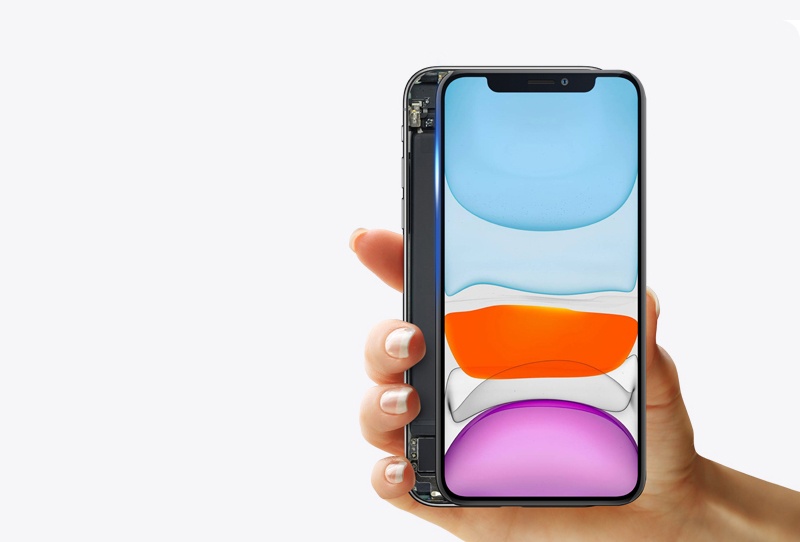
The name change is far from superficial; the screens of the iPhone 11 Pro series achieved a generational leap in technology.
First, a qualitative change in contrast ratio. From the iPhone X to the iPhone XS series, Apple’s OLED screens maintained a contrast ratio of 1,000,000:1. The iPhone 11 Pro doubled this number to 2,000,000:1, delivering deeper black reproduction and richer dark‑detail performance.
Second, a leap in brightness. The maximum typical brightness of the iPhone X and iPhone XS was only 625 nits, while the iPhone 11 Pro directly raised it to 800 nits – a 28% increase. More critically, the HDR peak brightness – when playing HDR content, the local peak brightness of this screen can reach 1200 nits, an unprecedented brightness level for an iPhone OLED screen at the time. This improvement brought the display of Dolby Vision and HDR10 content to new heights, from deep night skies to bright daylight scenes, with smoother and more natural transitions between light and shadow.
At the same time, while significantly improving screen quality, Apple also reduced power consumption by 15%. DisplayMate test data shows that the iPhone 11 Pro Max achieved a screen brightness of 821 nits at 50% APL (Average Picture Level), 770 nits at 100% APL, and a maximum home screen brightness of up to 902 nits. Compared with the previous‑generation iPhone XS Max, full‑screen peak brightness increased by 17%, while energy efficiency improved by 15% – thanks to Apple’s deep optimisations in OLED panel driver circuits and pixel arrangements.
In addition, the iPhone 11 Pro series completely removed 3D Touch, replacing it with Haptic Touch. This change freed up internal space in the screen module, allowing for increased battery capacity, and was a key trade‑off Apple made to reduce OLED screen thickness and improve battery life.
III. The Last Stand of LCD: The iPhone 11’s Differentiation Strategy
While the Pro series fully upgraded to OLED screens, the standard iPhone 11 remained in the LCD camp, using almost exactly the same screen specifications as the iPhone XR – 6.1 inches, 1792 × 828 resolution, 326 ppi. By the late 2010s, this pixel density was already significantly lower than competitors at the same price point (mid‑to‑high‑end Android models generally exceeded 400 ppi), yet Apple still adhered to this product strategy.
Apple’s core considerations for continuing to release an LCD model in 2019 were cost control and market segmentation. OLED screens are far more expensive to manufacture than LCDs. For value‑conscious users, the iPhone 11 offered core experiences like the A13 Bionic chip and dual‑camera system at a lower starting price; the compromise on screen quality was traded for broader market coverage. Although the Liquid Retina HD Display falls short of OLED in contrast ratio and black purity, it has inherent advantages such as no PWM flicker and less susceptibility to burn‑in over long periods, still satisfying a large user base with basic requirements for colour accuracy and daily use.
More importantly, the iPhone 11’s sales lifecycle marked the end of LCD in the main iPhone lineup – apart from the iPhone SE series, this was the last mainstream iPhone to feature an LCD screen. From then on, Apple’s digital series fully transitioned to OLED, marking the formal end of LCD’s 12‑year reign on the iPhone.
IV. DisplayMate A+ Rating: Highest Endorsement from a Professional Body
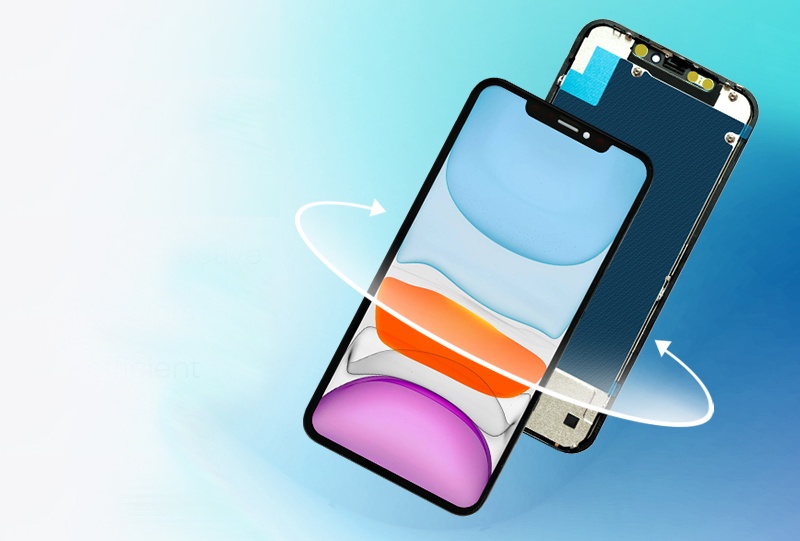
The screen of the iPhone 11 Pro Max was tested by DisplayMate, a professional screen testing organisation, receiving “the highest ever A+ rating,” being described as having “near‑perfect calibration and performance,” setting multiple records in various display performance tests, and winning the “Best Smartphone Display Award.”
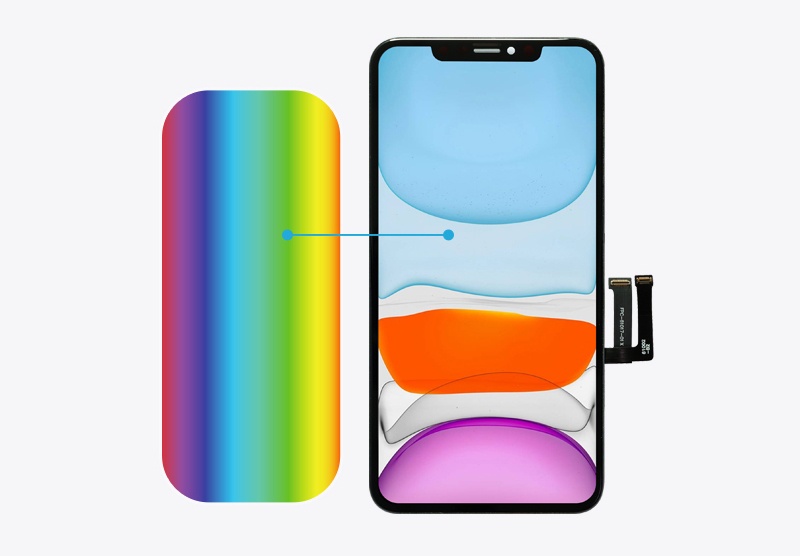
DisplayMate provided several key data points to support this top rating. First, absolute colour accuracy: the iPhone 11 Pro Max achieved a JNCD (Just Noticeable Color Difference) of 0.9 – DisplayMate noted that colour differences below 1 JNCD are visually indistinguishable, meaning this screen’s colour performance surpassed almost all phones, tablets, laptops, and even 4K UHD TVs on the market. Apple uses Precision Factory Display Calibration, ensuring that every iPhone 11 Pro Max leaves the factory with near‑perfect colour consistency.
Second, brightness performance: as mentioned earlier, full‑screen peak brightness of 770 nits, and a maximum home screen brightness of 902 nits, allowing clear reading of screen content even under strong outdoor light, greatly improving usability in mobile scenarios.
Third, screen reflectance: the screen reflectance of the iPhone 11 Pro Max was further reduced compared to its predecessor, maintaining excellent readability even in direct sunlight outdoors.
DisplayMate commented that the iPhone 11 Pro Max provided “significantly better display performance than competing smartphones,” and whether watching HDR videos, browsing photos, or in daily use, this screen represented the highest standard of smartphone display technology at the time.
V. The Evolution of Screen Glass: The Transition from Gorilla Glass to Ceramic Shield
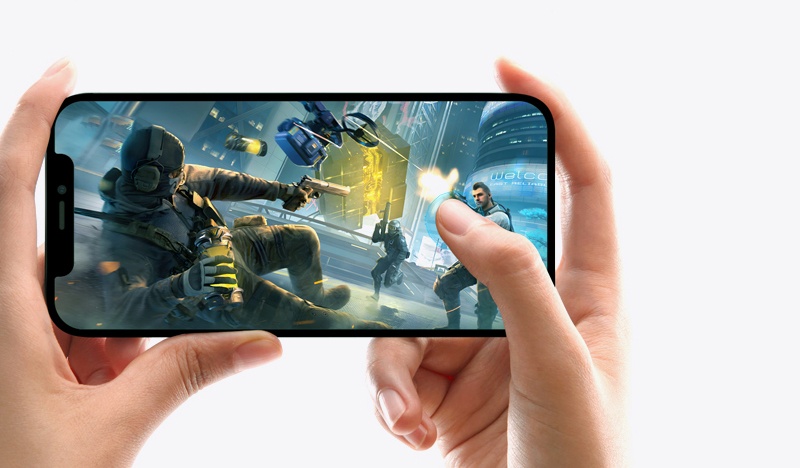
The iPhone 11 series used Corning Gorilla Glass for its screen cover – a widely used protective glass solution in the industry, offering excellent scratch resistance and retaining an oleophobic anti‑fingerprint coating.
This generation was also the last stop for Gorilla Glass protective glass on digital‑series iPhones in Apple’s partnership with Corning. The iPhone 12 series, released in 2020, introduced Ceramic Shield for the first time, with Apple claiming a four‑fold improvement in drop performance over the iPhone 11’s glass. The Ceramic Shield on the iPhone 12 withstood 442 Newtons of force before breaking, while the Gorilla Glass on the iPhone 11 cracked at 352 Newtons – meaning Ceramic Shield improved impact resistance by about 25% over the previous generation. In scratch tests, the iPhone 12 showed no scratches at Mohs hardness level 6, while the iPhone 11 was clearly damaged at level 6.
From a retrospective perspective, the iPhone 11’s screen glass represents the final Gorilla Glass solution on iPhones before the Ceramic Shield era, witnessing an important turning point in the history of Apple’s collaboration with Corning.
VI. Connecting Past and Future: The iPhone 11 Screen’s Historical Position
The iPhone 11 series occupies a critical position in the evolution of iPhone screens – bridging the past and the future.
From a legacy perspective, the Pro series’ Super Retina XDR was the culmination of Apple’s display technology – it inherited the OLED full‑screen design from the iPhone X, continued the high‑resolution standard (458 ppi) of the iPhone XS, and for the first time brought the XDR professional display standard to a mobile device, establishing the baseline for subsequent iPhone Pro series screen performance.
From an innovative perspective, the screen parameters of the iPhone 11 Pro set a clear direction for future development – its balance of OLED brightness, contrast ratio, colour accuracy, and energy efficiency became the foundational template for the continuous optimisation of OLED screens from the iPhone 12 through the iPhone 16 series. The standard iPhone 11 became the swan song for mainstream LCD‑screen iPhones, representing the impending end of the decade‑long LCD era. It is also worth noting that the iPhone 11 witnessed the key transition from 3D Touch to Haptic Touch, completing the final technical groundwork for Apple’s subsequent full‑screen gesture interactions.
Conclusion
From a specifications standpoint, the iPhone 11 Pro’s 5.8/6.5 inches, 800 nits typical brightness, and 2,000,000:1 contrast ratio might no longer be considered top‑tier today, but the XDR screen of 2019 carries a deeper meaning that goes beyond the numbers – it symbolises the dual identity of “the terminator of the LCD era” and “the explorer of OLED’s peak.” The iPhone 11 and iPhone 11 Pro respectively represent two sides of Apple’s screen strategy: the standard model held the market baseline with mature, affordable LCD, while the Pro series set a technological benchmark with extreme specifications and continuously evolved toward the ultimate form of OLED. It not only delivered the best display system in smartphones at the time but also paved the way for the Ceramic Shield of the iPhone 12, the 120Hz ProMotion of the iPhone 13 Pro, and the 2000‑nit peak brightness of the iPhone 14 Pro – all on the path to the limits of the screen.