

The “Cyber Purgatory” of a Screen: How the iPhone 13 Pro Became the Frontline of Conflict Between Technical Logic and User Survival
When the iPhone 13 Pro made its stunning debut in the fall of 2021 with its 6.1‑inch ProMotion adaptive high‑refresh‑rate display, no one imagined that this screen — hailed as “the best display in smart devices” — would become the epicenter of a global social movement five years later. Behind the buttery smooth scrolling of 120Hz ProMotion lies the cold iron law of parts serialization; beneath the toughness of the Ceramic Shield lies the cold reality of tens of thousands of users facing green screen issues yet unable to afford a repair or reluctant to replace the device. Today, in 2026, when the second‑hand price of this phone has dropped to around 3,000 yuan, yet the official screen replacement quote is over 2,000 yuan, the iPhone 13 Pro screen is no longer a benchmark of display technology, but has become a collective touchstone for consumer fairness, repair justice, and technological ethics.
1. The Paradox of Technology: When the Best Screen Becomes an “Identity Cage”
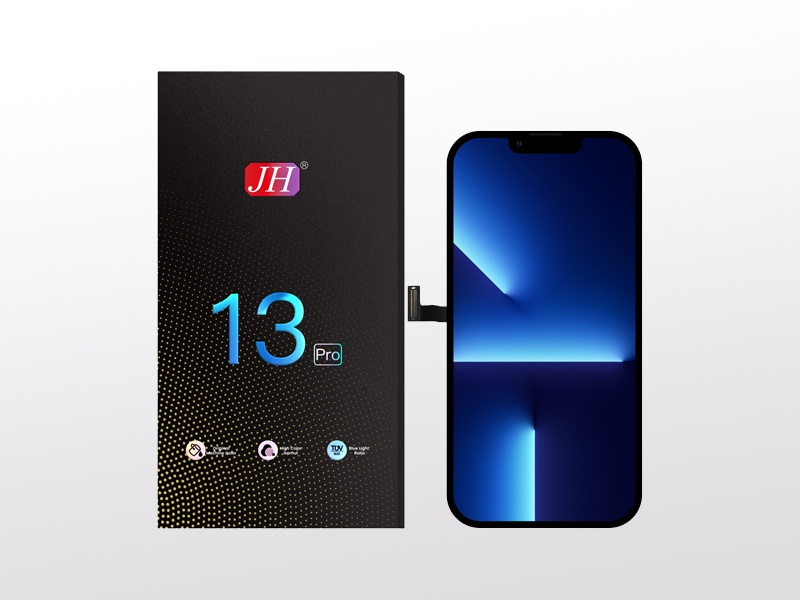
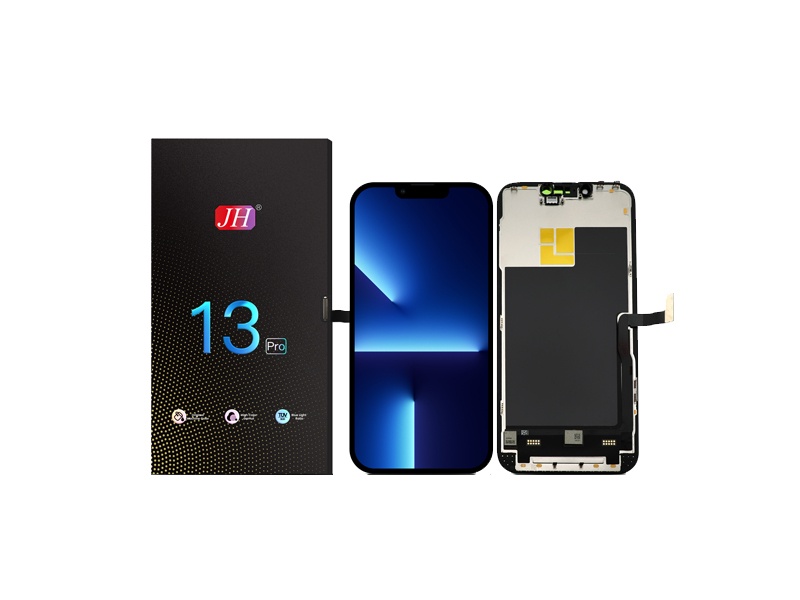
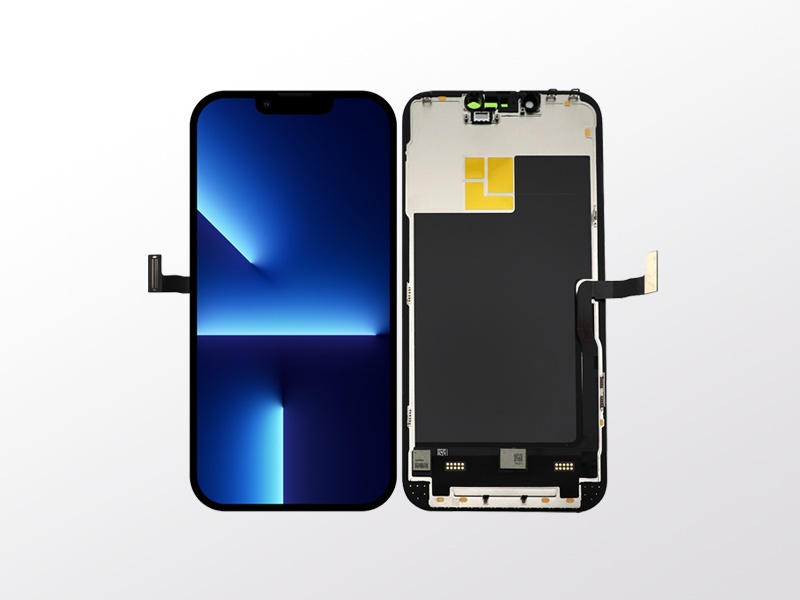
The OLED screen of the iPhone 13 Pro represents the pinnacle of Apple’s display technology. The Super Retina XDR display, 1,000 nits of brightness, and ProMotion technology make this screen a window through which countless users immerse themselves in the digital world. However, Apple has built an invisible enclosure through “parts serialization” — binding the serial number of each component to the motherboard. Once a user replaces the screen through a third‑party repair without going through the official calibration process, some functions are locked, and even normal use can be affected.
In early 2026, French regulators announced an investigation into Apple’s “parts serialization” practices. A key case came to light: consumers found that after replacing faulty displays on iPhone 13 and 13 Pro models, Face ID stopped working. The French consumer organization Halte à l’Obsolescence Programmée filed a lawsuit based on the Anti‑Waste and Circular Economy Law, which explicitly states that “creating obstacles to repair” is illegal.
In the United States, more than a quarter of states — including Washington and New York — have passed Right‑to‑Repair laws, requiring manufacturers to provide repair parts, tools, and diagnostic software to independent repair shops and consumers. The Washington state law that took effect in January 2026 explicitly requires parts needed for repairs to be provided “on fair and reasonable terms.” The European Union has taken even bigger steps — the Right‑to‑Repair directive passed in 2024 requires that 15 types of spare parts for smartphones and tablets must be made available to professional repairers for seven years, and five key parts, including displays, must also be sold directly to consumers. Starting in June 2025, phones sold in the EU must clearly display a repairability grade from A to E. Under mounting pressure, Apple was forced to partially loosen its parts serialization policy in spring 2024; in fall 2024, it further began supporting repairs using used genuine parts.
Despite these changes advancing globally, the tug‑of‑war between repair rights and commercial interests continues. For countless ordinary users, a cracked screen still brings a costly and uncertain struggle for survival.
2. Differentiated After‑sales: The Global “Dual Pricing” Under the Green Screen
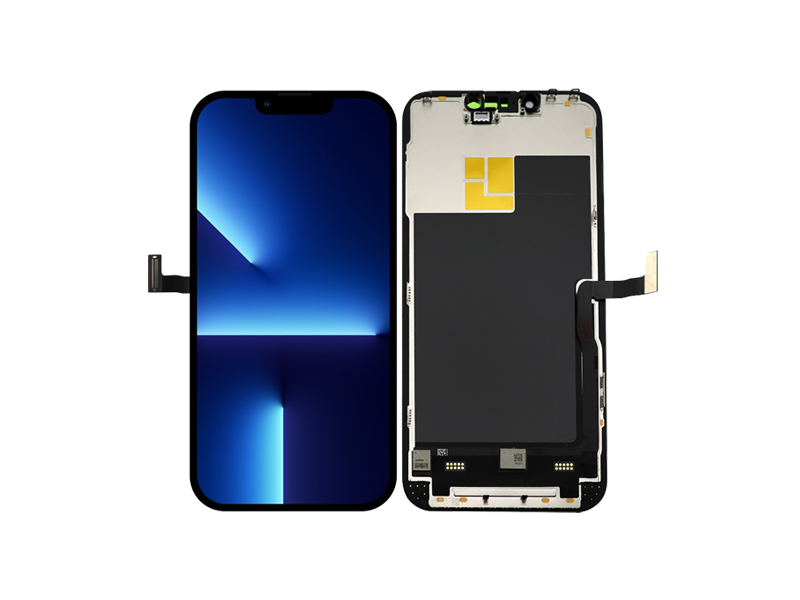
From late 2025 to early 2026, a large number of iPhone 13 Pro users discovered that when temperatures suddenly dropped, the lower half of their phone screen would suddenly display green horizontal lines, flickering continuously in the cold. Restarting would improve the situation temporarily, but the problem recurred in low‑temperature environments. Disassembly analysis suggested this might be related to poor soldering of the screen driver IC — low temperatures causing poor contact at the solder joints. Many users were convinced this was a design or manufacturing defect that should be repaired for free. However, when they walked into Apple’s official after‑sales service, the reply they received was: low temperature is a normal phenomenon, no obvious abnormality was detected in testing, no free replacement for out‑of‑warranty products, and the out‑of‑pocket screen replacement quote was over 2,000 yuan.
What infuriated users was evidence that overseas users with the same problem had received exceptional approval for free screen replacements. Chinese users flocked to complaint platforms to report the injustice of “same product, different rights,” and the WeChat维权 groups they formed quickly exceeded 1,400 members. After persistent reporting, on March 9, 2026, the Beijing Dongcheng District Market Supervision and Administration Bureau formally launched an investigation into Apple Electronics Products Commerce (Beijing) Co., Ltd. This regulatory intervention marked the escalation of the consumer rights struggle triggered by the iPhone 13 Pro screen defect — from a back‑and‑forth between users and customer service to a regulatory event that could affect the company’s long‑term image in the Chinese market.
As of mid‑2026, no final conclusion has been reached in that investigation. But regardless of the outcome, this event has already revealed a deep‑seated social problem: the “dual‑track system” of iPhone 13 Pro screen repair — free overseas, paid in China, coupled with high official prices and third‑party chaos — means that Chinese consumers face costs and anxiety far higher than those in other markets for the same product issue. This reality of “global sales, different after‑sales rights” has provoked deep questions about consumer fairness and has turned the iPhone 13 Pro screen into an invisible cost standing before countless ordinary consumers.
3. Industry Chaos: Fishing in Troubled Waters in a $310 Billion Blue Ocean
Huge repair demand has given rise to a massive market. Data shows that the global smartphone repair market reached approximately $219.2 billion** in 2024 and is expected to grow to **$265.8 billion by 2030. The Chinese market has been particularly outstanding, with its scale expected to reach $52.2 billion by 2030. Screen repair, as one of the core businesses, accounts for half of the repair market.
But beneath the prosperity lies a deep trust crisis. On the 2025 CCTV 3.15 Gala, “Zhuomuniao,” China’s largest home repair platform, was exposed for long‑standing systematic problems such as “creating problems where none exist, exaggerating minor issues, and overcharging.” Investigation found that the platform took a commission as high as 60%, leaving repair technicians with only 40% — a split that forced technicians to rack their brains to overcharge. After the exposure, the Chongqing Market Supervision and Administration Bureau quickly dispatched more than 80 law enforcement officers to Zhuomuniao’s headquarters. The investigation found that repair technicians used tactics such as falsely reporting faults, swapping parts, and exaggerating charges to profit, and even used parts without 3C certification.
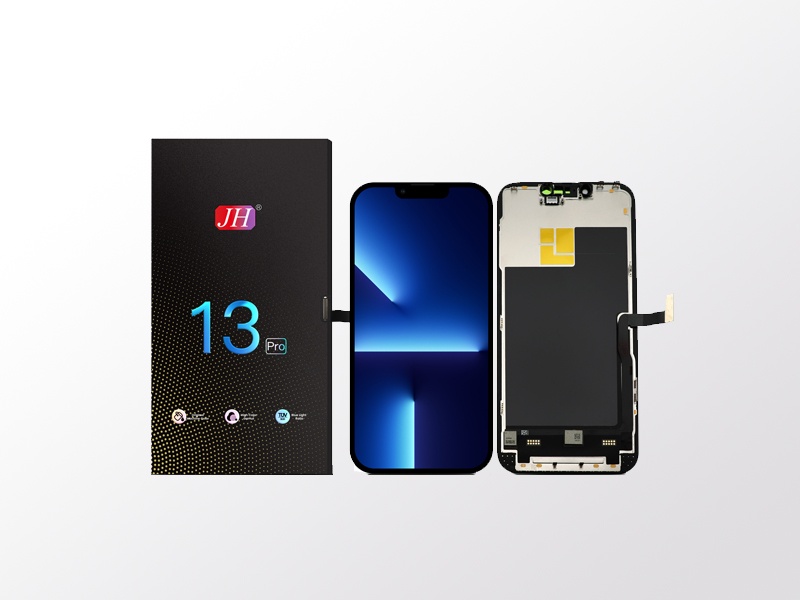
For iPhone 13 Pro screen repair, the industry chaos is equally severe. Because OLED screens are technically complex and expensive, unscrupulous merchants pass off refurbished or counterfeit screens as genuine, and used pull‑off parts as brand new. When users seek help on complaint platforms for green screen issues, the replies they receive are often frustrating — third‑party repairers vary widely in their ability to guarantee quality, and users often find themselves in a situation where providing evidence is difficult and protecting their rights is impossible.
After the 3.15 exposure, Zhuomuniao promised to “thoroughly investigate and punish the technicians involved” and issued a “Rectification Commitment Letter” admitting that “in the pursuit of scale expansion, management got out of control.” Regulatory authorities said they would file cases based on laws such as the Anti‑Unfair Competition Law and the Consumer Protection Law, striving to “rectify thoroughly and punish individuals to the full extent.” Standardization of the mobile phone repair industry has begun to accelerate — China’s group standard “T/SDECC 003‑2025 ‘Smart Product Display Repair Service Specification’” was officially released and implemented in November 2025, setting clear requirements for repair service processes, information management, and safety management.
But a cold question still remains: today, consumers still have no way to be sure whether the iPhone 13 Pro screen they have replaced during a repair is genuine or counterfeit, new or used. This persistent information asymmetry is the deep root of the chaos in the repair industry.
4. Environmental Value: The Circular Code Within a Screen
When an iPhone 13 Pro screen cracks, many users’ first reaction is “just buy a new phone.” However, few know that behind an OLED screen lies a hidden world of resource circulation.
According to industry estimates, processing one ton of discarded consumer electronic screens can extract about 140 grams of high‑purity indium metal and 200 kilograms of reusable glass substrate, while reducing hazardous waste emissions by 0.8 tons. Indium metal is a core material for OLED transparent electrodes, with extremely limited global reserves and high recovery difficulty. The amount of indium metal contained in a single iPhone 13 Pro’s OLED screen is tiny, but when millions of scrapped phones are aggregated each year, they form a huge resource bank. Estimates suggest that using advanced coating‑assisted recycling processes, the indium recovery from one ton of old phone screens can increase from 200 grams using traditional methods to 460 grams, with purity reaching 99.99%, directly usable for new screen production.
The global e‑waste problem is equally alarming. In 2022, the world generated 62 million tons of e‑waste, of which less than a quarter was formally collected and recycled. E‑waste not only wastes resources but also causes serious environmental pollution when landfilled or incinerated. Globally, the premature disposal of electronic devices causes 261 million tons of CO₂ equivalent emissions each year. In this sense, giving a compliant iPhone 13 Pro screen a new lease on life instead of scrapping the whole device contributes not just a household calculation, but a tangible environmental responsibility.
5. Seeking Balance: Why Compliant Repair Is the Only Way Forward
For consumers, what is the way out when it comes to iPhone 13 Pro screen repair?
Although the repair market still has many problems, the tide of industry change is already surging. By choosing compliant, transparent, and traceable repair channels, consumers can minimize risks. The internationally authoritative guide for electronic repair, IPC‑A‑610, emphasizes the “traceability” of the repair process, ensuring that every step is documented.
In 2026, global Right‑to‑Repair legislation has entered a full acceleration phase. In the EU, 31 member states must transpose the Right‑to‑Repair directive into national law by July of this year. In the United States, multiple states have passed or are advancing Right‑to‑Repair legislation. Apple’s response — expanding its Self Service Repair program to more models and changing parts diagnostic labels from “used” to “genuine” to improve transparency — marks that even within the traditionally closed Apple ecosystem, the door to repair rights is slowly being pushed open.
Nevertheless, rational choices by consumers remain the most important line of defense today. When an iPhone 13 Pro screen cracks, the priority is not to panic but to calmly evaluate repair options — prioritize service providers that offer clear price lists, use compliant parts, and provide formal warranties. Avoid unscrupulous merchants who lure with “low prices” and profit from information black holes. At the same time, actively keep repair records and, if rights are infringed, seek legal protection through channels such as 12315.
6. Conclusion
The iPhone 13 Pro screen was once a symbol of Apple’s technological monopoly — binding each screen to the user’s identity through parts serialization, making the right to repair a luxury for a privileged few. Yet over the past five years, it has transformed into a complex prism of social fairness: one facet reflects the heavy burden of the 2,149 yuan official repair cost; another reflects the global legislative progress on the right to repair; one angle reveals the public outcry for green screen warranty; another reveals the environmental value of screen recycling.
In 2026, Apple made a major policy adjustment in China with “battery replacement without whole‑unit swap,” and the Beijing Dongcheng District Market Supervision and Administration Bureau has opened an investigation into the refusal to warranty the flickering‑green‑screen issue. When an iPhone 13 Pro screen shatters, what you face is not just a bill of over 2,000 yuan. You face a $310 billion global repair market, a wave of Right‑to‑Repair legislation spanning 12 countries, a green value chain that runs from rare‑metal extraction to environmentally compliant recycling — and, above all, a re‑examination of the balance of power between tech giants and ordinary consumers.
Our choice of how to repair an iPhone 13 Pro screen is becoming the most authentic social declaration of the post‑smartphone era: technology should serve users, not become a shackle that controls them. When this screen cracks again, remember — what you hold in your hand is not just glass, but a right that is being jointly defended by users around the world.