iPhone OLED Display: From iPhone X to Full-Series Adoption – Technological Evolution and Future Prospects
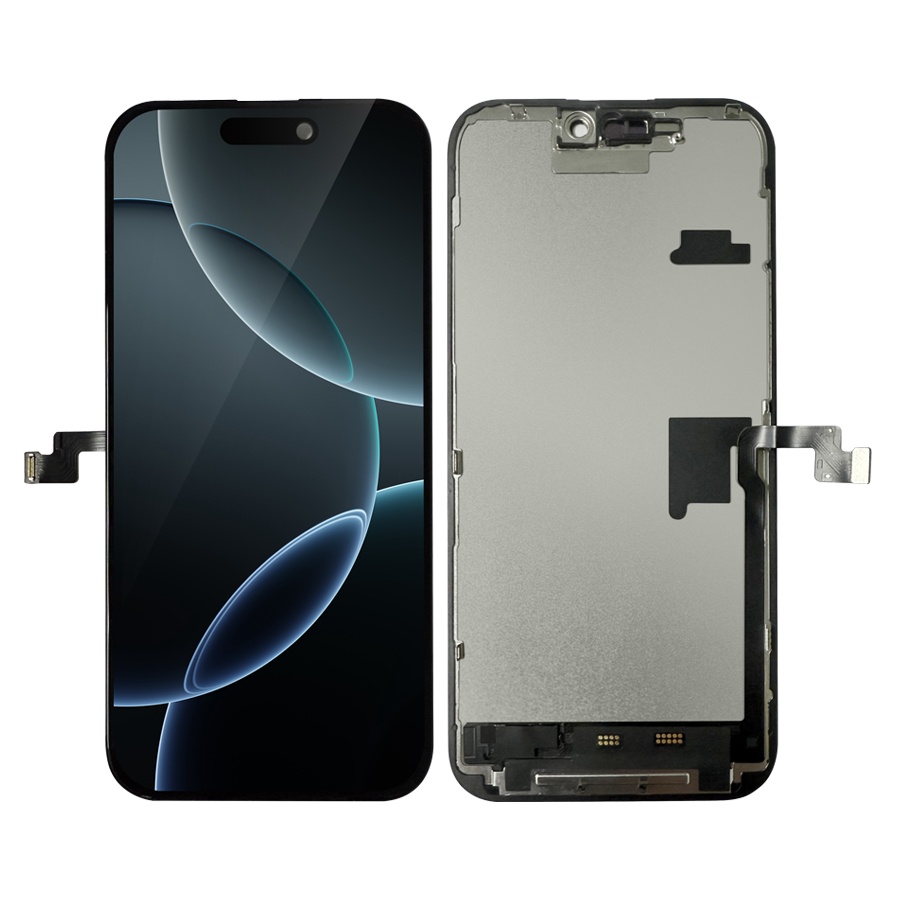
Since the iPhone X first introduced an OLED display in 2017, Apple has completed a major eight‑year transformation in display technology. In February 2025, with the launch of the iPhone 16e and the official discontinuation of the third‑generation iPhone SE, all iPhone models currently sold by Apple now feature OLED displays, marking the complete exit of LCD technology from the iPhone lineup. This milestone signifies a new era for Apple’s smartphone display technology.
I. The Evolution of OLED Displays in iPhones
Apple’s journey with OLED began in September 2017. The iPhone X, introduced to celebrate the tenth anniversary of the iPhone, was the first iPhone to adopt an OLED display. In the following years, Apple adopted a gradual transition strategy: the 2018 iPhone XS and iPhone XS Max used OLED, while the iPhone XR retained LCD; in the 2019 iPhone 11 series, the iPhone 11 Pro and iPhone 11 Pro Max featured OLED, whereas the standard iPhone 11 kept LCD.
The true turning point came in 2020. The entire iPhone 12 series – all four models – adopted OLED displays, marking the first time Apple fully embraced OLED across its flagship product line. Since then, the iPhone 13, iPhone 14, iPhone 15, and iPhone 16 series have all followed this path. However, due to cost considerations, the iPhone SE series had continued to use LCD as a lower‑priced option – the first two generations of iPhone SE inherited the design and LCD components of the iPhone 8. It was only with the release of the iPhone 16e that Apple finally extended OLED to the entire product range.
II. Why Apple Chose OLED Technology
OLED (Organic Light‑Emitting Diode) technology differs fundamentally from traditional LCD in its light‑emitting principle. LCD requires a backlight panel to produce light, whereas OLED pixels emit light individually. This essential difference brings multiple advantages.
Contrast and Black Levels: Because OLED pixels can be turned off independently, they emit no light when displaying black, achieving true black. Apple’s OLED displays offer a contrast ratio of up to 2,000,000:1 – a level unattainable with LCD screens.
Color and Brightness: Apple brands its OLED displays as “Super Retina XDR displays”. Compared with LCD, OLED technology delivers more vivid and saturated colors, higher brightness, and higher resolution. Super Retina and Super Retina XDR displays feature ultra‑high brightness, wide color support, and exceptional color accuracy, overcoming challenges previously associated with traditional OLED panels.
Thinness and Energy Efficiency: The absence of a backlight module allows OLED displays to be thinner. At the same time, thanks to their self‑emissive nature, OLED screens consume virtually no power when displaying black content, improving overall energy efficiency.
Response Speed: OLED pixel switching is orders of magnitude faster than LCD – the best LCDs take several milliseconds to switch colors, while the best OLEDs do so in microseconds. This means that when gaming or playing dynamic video, OLED screens are far less prone to blurring or trailing.
HDR Support: OLED displays support HDR (High Dynamic Range), enabling them to reproduce a wide range of brightness levels in photos and videos. Even the lower‑priced iPhone 16e became the first budget iPhone to support HDR.
III. Display Specifications Across Different Models
Although all models now use OLED, there are still differences in screen specifications among various iPhone models. Taking the iPhone 16 series as an example:
iPhone 16: 6.1‑inch Super Retina XDR display, 2556×1179‑pixel resolution (460 ppi), maximum brightness 1000 nits, HDR peak brightness 1600 nits, outdoor peak brightness 2000 nits.
iPhone 16 Plus: 6.7‑inch Super Retina XDR display.
iPhone 16e: 6.1‑inch Super Retina XDR display, maximum brightness 800 nits, HDR peak brightness 1200 nits.
The high‑end Pro models are equipped with more advanced LTPO OLED panels that support 120Hz ProMotion adaptive refresh rates. LTPO (Low‑Temperature Polycrystalline Oxide) backplane technology enables variable refresh rates on the display panel, ensuring smooth experiences while effectively reducing power consumption.
IV. OLED Screen Maintenance and Precautions
OLED displays may experience “image retention” or “burn‑in” over prolonged use. Apple has designed its Super Retina and Super Retina XDR displays with careful engineering to mitigate this issue – using special algorithms that monitor individual pixel usage and automatically adjust each pixel’s brightness.
Users can also take the following measures to protect their OLED screens:
Enable “Auto‑Brightness” to avoid prolonged display at maximum brightness.
Keep the iPhone updated to the latest iOS version.
Set a shorter auto‑lock time.
Avoid displaying static high‑contrast images for extended periods.
Change wallpapers regularly.
V. Future Outlook for OLED Technology
Apple continues to deepen its investment in OLED technology. Industry analysis suggests that future iPhones may introduce several OLED upgrades:
Tandem OLED Technology: Stacking two or more emissive layers to improve luminous efficiency while reducing power consumption. Dual‑layer OLED can theoretically achieve twice the brightness of single‑layer OLED.
M16 OLED Panels: Expected to debut in the iPhone 18 Pro series, these panels feature native 10‑bit color depth, capable of displaying over one billion colors, and will replace blue fluorescent OLED materials with more efficient blue phosphorescent materials for the first time.
CoE Technology: By integrating color filter functionality directly on the thin‑film encapsulation layer and removing the traditional polarizer, panel thickness can be further reduced while brightness is enhanced.
Color Standard Upgrades: Apple is accelerating its transition from the DCI‑P3 to the BT.2020 color standard, imposing higher requirements on color purity, spectral control, and energy efficiency.
Conclusion
From the first attempt with the iPhone X in 2017 to full‑series OLED adoption in 2025, Apple has spent eight years completing a thorough transformation of display technology. The high contrast, true blacks, vibrant colors, and HDR support brought by OLED have redefined the visual experience of the iPhone. As new technologies such as tandem OLED and M16 panels are gradually introduced, the display performance of iPhones will continue to improve. For consumers, no matter which price tier of iPhone they choose, they can now enjoy the outstanding visual experience offered by OLED displays – and that, in itself, is the greatest value brought by technological democratization.